The City Tried to Knock Down a Warehouse Full of Masterpieces — A Filing Error Saved Them All
The Letter Arrived on a Tuesday
There is a particular kind of dread that comes with receiving official government correspondence. The kind printed on heavy paper with a seal in the corner. The kind that begins with phrases like pursuant to municipal code and ends with a deadline.
The owner of a converted industrial warehouse — a private collector who had spent decades quietly accumulating a significant art collection inside the building — opened exactly that kind of letter on an unremarkable Tuesday morning. The city had condemned his property. The structure had been flagged as a public safety hazard under a derelict building ordinance. He had sixty days to contest the order or vacate. After that, demolition could proceed.
The problem wasn't the building. The building was fine. The problem was paperwork — specifically, a renovation permit filed more than a decade earlier that had been logged under the wrong parcel number by a city clerk and had been quietly moldering in the wrong folder ever since.
As far as the city's records were concerned, the warehouse had never been legally updated. As far as the city was concerned, it was a crumbling industrial shell.
As far as reality was concerned, it was home to a private collection that included works by artists whose pieces regularly sell at auction for seven and eight figures.
The Building Had a History Worth Keeping
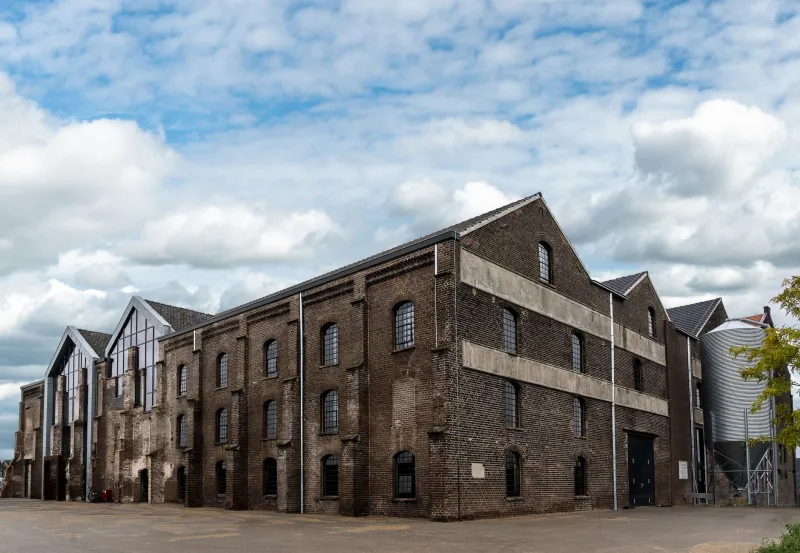
The warehouse itself dated to the early twentieth century, built during an era when American industrial architecture treated function as its own form of art. Exposed timber framing, hand-laid brick, a roofline that had survived nearly a hundred years of weather without significant structural compromise. The kind of building that preservation architects write letters to city councils about.
The collector had purchased it decades earlier specifically because of those bones. He'd converted the interior gradually — reinforcing the floors to handle the weight of large-format sculpture, installing climate control systems for works on paper, eventually transforming what had been a loading dock into a gallery-quality display space. All of it permitted. All of it inspected. All of it documented.
Except, as it turned out, not documented in the right place.
The renovation permit that should have updated the building's legal status in the city's database had been assigned a parcel number one digit off from the correct one. A transposition error — the kind that happens when someone is entering data quickly and the numbers blur together. The permit was filed. It was technically in the system. It was simply attached to a vacant lot three blocks away.
Sixty Days to Find a Piece of Paper
The collector hired an attorney. The attorney filed a formal contest of the demolition order and requested a full review of the building's permit history. The city's response was a thick envelope of documentation confirming, from their perspective, that the building had no valid renovation permits on record and had been in violation of updated safety codes for over a decade.
At this point, the attorney did something that turned out to be accidentally brilliant: rather than arguing the building was safe, she requested the original physical permit files — not the digitized records, but the actual paper documents from the city's archival storage.
This was, by all accounts, an unusual move. The city had digitized most of its permit records years earlier, and the physical files were stored in an offsite facility that nobody had accessed in years. The request took three weeks to process. The city's archivist apparently had to locate a filing system that predated the current database software.
What came back was a folder containing a renovation permit for a vacant lot — with a permit number, an inspection signature, and a project description that matched the warehouse's conversion work in every specific detail except the address.
The transposition error was visible to anyone who looked. The parcel number on the permit ended in 47. The warehouse's actual parcel number ended in 74.
Two digits. Eleven years. One demolition order.
The Chaos That Followed Saved the Building Entirely
The city, to its credit, acknowledged the error immediately. The demolition order was rescinded. The permit was corrected in the database. The collector's attorney prepared to declare victory and go home.
But the story had attracted attention. Local preservation advocates, alerted to the situation by news coverage of the demolition contest, had spent those same sixty days researching the building's history. What they found was more than anyone had expected: the warehouse was one of fewer than a dozen remaining examples of a specific regional industrial construction style, built by a contractor whose work had largely been demolished during urban renewal projects decades earlier.
The advocates submitted a landmark designation application. The city's historic preservation board, now acutely aware that it had nearly demolished a significant piece of architectural history due to a one-digit clerical error, approved the application with unusual speed.
The warehouse is now a protected landmark. The art collection remains inside. The building cannot be demolished without a review process that would take years and require the approval of multiple city agencies.
All of which is to say: the city tried to knock it down. A filing mistake stopped them. And the investigation that mistake triggered turned out to be the best thing that ever happened to the building.
The Permit Is Now Framed on the Wall
The collector, by all accounts, has a sense of humor about the whole thing. The corrected permit — the one with the transposition error visible in the original and the correction stamped in red ink — is reportedly matted and framed and hanging near the entrance to the collection.
It's not the most valuable piece in the building. But it might be the most important one.