The Time a U.S. Soldier Surrendered to a Dog and Military Lawyers Lost Their Minds Over It
There are moments in military history so strange that the official record practically begs you not to read it too carefully. The case of Corporal James Allen Whitfield of the 10th U.S. Infantry is one of those moments. It involves a forgotten skirmish in the Philippines in 1899, a Spanish commander's beloved Labrador retriever named Almirante, and a legal question that military lawyers were still arguing about in 1912: did Whitfield ever actually lose a battle?
The answer, depending on who you asked and how generously you interpreted international military law, was technically no.
How You End Up Surrendering to a Dog
First, some context. The Spanish-American War of 1898 is mostly remembered for Cuba, Teddy Roosevelt, and the phrase "Remember the Maine." But the conflict had a complicated Philippine chapter that dragged on well past the formal end of hostilities, involving scattered Spanish holdouts, Filipino insurgent forces, and a U.S. military presence trying to manage a situation that changed daily.
In the spring of 1899, Corporal Whitfield was part of a small reconnaissance unit that got separated from its company during a patrol near a coastal settlement on Luzon. Cut off, outnumbered, and — according to his own later testimony — "entirely without strategic options," Whitfield found himself cornered in a storage building by a mixed group of fighters loyal to a former Spanish garrison commander named Colonel Rodrigo Vásquez-Herrera.
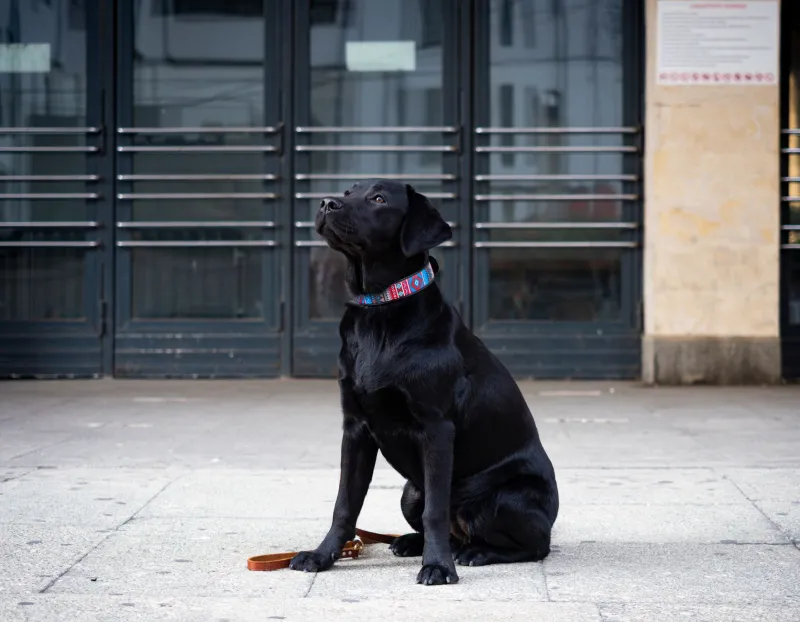
Vásquez-Herrera was, by all surviving accounts, an eccentric man who had refused to formally acknowledge the end of the war and was still technically operating as though Spain had a military presence in the region. He was also deeply devoted to his dog, a large black Labrador he had named Almirante — Admiral — and who accompanied him everywhere, including, apparently, into tense military standoffs.
When Vásquez-Herrera sent a messenger to demand Whitfield's surrender, Whitfield stalled. He sent back a message asking for the terms. Vásquez-Herrera's reply was, depending on the translation, either "unconditional" or "bring your weapons and come out" — the documents are disputed. What is not disputed is what happened next.
The Handoff That Broke Military Law
Whitfield walked out of the building. Vásquez-Herrera was not present — he had stepped away briefly, leaving Almirante sitting at the entrance to the compound in what witnesses described as a supervisory posture. Whitfield, facing the dog and nobody else, made a decision that was either deeply pragmatic or profoundly unhinged, depending on your perspective.
He placed his rifle on the ground in front of the dog.
In his later written account, Whitfield explained his reasoning with a clarity that is almost admirable: "There was no commanding officer present to receive my surrender. The animal was in the position of authority. I acted accordingly."
Vásquez-Herrera returned moments later to find his dog sitting next to an American soldier's rifle and said soldier standing with his hands raised. He accepted the situation with what witnesses called "remarkable composure" and took Whitfield into custody.
Whitfield was held for eleven days before being released as part of a broader negotiated arrangement. He returned to his unit, filed his report, and probably hoped the whole thing would be quietly forgotten.
It was not.
The Legal Nightmare Begins
The problem — and it was a genuinely fascinating legal problem — was this: under the military conventions of the era, a formal surrender required a commanding officer on both sides. Whitfield had surrendered. But to whom, exactly, had he surrendered?
Vásquez-Herrera had not been present at the moment of the handoff. The rifle had been placed before Almirante. No human officer had received it. When military lawyers at the Army Judge Advocate General's office began reviewing Whitfield's record in connection with a routine promotion review, someone noticed the gap and flagged it.
What followed was, by any measure, one of the more absurd bureaucratic spirals in American military history. The central question — whether a surrender to a dog constituted a valid surrender under international military law — turned out to have no clear answer. Legal scholars consulted the Lieber Code, the Hague Conventions, and about a dozen other frameworks. None of them had thought to address this particular scenario.
One faction of military lawyers argued that since the surrender was legally invalid, Whitfield had technically never surrendered, which meant he had technically never been defeated in combat. Another faction argued that the surrender was valid because Whitfield's intent was clear, regardless of who received the rifle. A third faction, possibly the most honest, argued that the whole situation was unprecedented and someone should probably just let it go.
Congressional Involvement (Because Of Course)
It would not be let go. By 1904, the question had reached a congressional subcommittee reviewing military code updates, where it was cited as a case study in the need for clearer language around surrender protocols. Whitfield, who by this point had left the Army and was working as a postal inspector in Ohio, was called to testify.
His testimony was, according to the Congressional Record, brief. When asked whether he believed he had surrendered to the dog, he replied: "I believe I surrendered to the circumstances. The dog was the circumstances."
The subcommittee did not resolve the question. Updated military codes eventually included language clarifying that surrender required a human officer to be present and receiving, but the existing question of Whitfield's record was left ambiguous.
His service file, last reviewed by historians in the 1970s, lists his combat record as "uncontested" — which is either a bureaucratic placeholder or the most accidentally perfect description of a man's military career ever committed to paper.
What Almirante Got Out of It
For the record: Almirante lived until 1907, reportedly in excellent health. Vásquez-Herrera returned to Spain after eventually acknowledging the end of hostilities and, according to a brief mention in a Madrid newspaper from 1903, kept the dog's portrait on his wall.
Whitfield never commented publicly on the dog again. But his granddaughter, interviewed by a regional Ohio paper in 1961, said he kept a small photograph of a black Labrador in his desk drawer until he died.
She didn't know where it came from. He never explained it.