One Plate of Lamb Chops Nearly Collapsed a Peace Treaty Between Two Governments
There are moments in history that hinge on grand decisions — treaties signed in gilded halls, battles won by inches, speeches that moved nations. And then there are moments like the Trieste Luncheon Incident of 1946, where the fate of postwar European diplomacy wobbled on the edge of a knife because someone ordered the wrong entrée.
It sounds like the setup to a bad joke. It was not a joke. Diplomats lost sleep over this. Generals filed formal complaints. The U.S. State Department has a paper trail on it that runs to nearly forty pages.
The Setup Nobody Saw Coming
In the chaotic aftermath of World War II, the city of Trieste — a port city sitting at the northeastern tip of the Adriatic Sea — became one of the most contested pieces of real estate in Europe. Both Yugoslavia and Italy claimed it. Britain and the United States backed Italy. The Soviet Union backed Yugoslavia. The whole situation was a pressure cooker with a very loose lid.
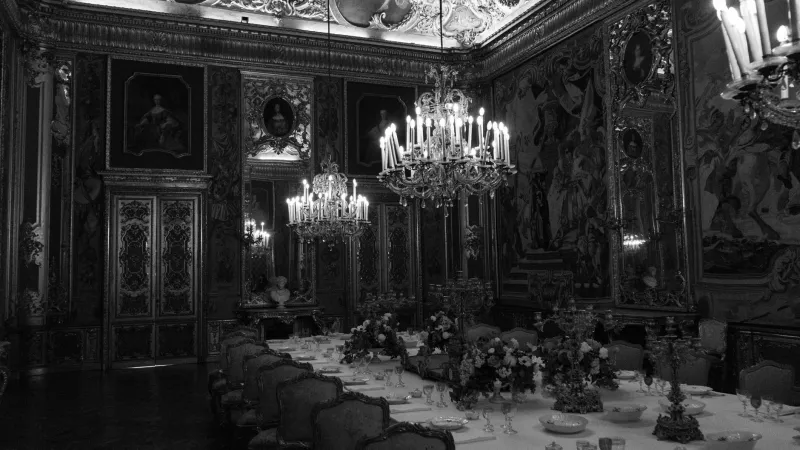
To manage the tension, Allied commanders organized a series of joint working luncheons in late 1946. The idea was straightforward: keep communication open, keep things civil, and maybe eat a decent meal while preventing another war. Simple enough, right?
The luncheon on November 14th was hosted by British forces at their administrative headquarters. A British adjutant — a junior officer whose name history has mercifully obscured — was tasked with coordinating the menu with the Soviet delegation's liaison in advance. This was standard protocol. Dietary preferences, cultural considerations, the whole thing.
The liaison communicated that the Soviet general attending would prefer "no lamb." The adjutant wrote it down. Then, somewhere between that notepad and the kitchen, the word "no" vanished entirely.
The Moment Everything Went Wrong
When Soviet General Konstantin Leselidze sat down at the table and was presented with a centerpiece platter of roasted lamb chops, he did not simply frown and ask for something else. He stood up. He made a short, sharp statement in Russian that his interpreter rendered — perhaps generously — as "This is not acceptable." Then he walked out.
Now, in most contexts, a man leaving a lunch because he dislikes the menu is not an international incident. It is mildly awkward at worst. But this was 1946, in Trieste, with two nuclear-armed superpowers eyeing each other across a contested city. When a Soviet general walks out of a joint Allied luncheon, the room does not shrug and refill the bread basket.
Within hours, the Soviet delegation had filed a formal complaint alleging that the meal selection was a deliberate insult — a calculated act of cultural disrespect designed to humiliate their representative. The complaint went up the chain. Then it kept going.
Six Weeks of Absolute Bureaucratic Chaos
What followed was, by any reasonable measure, one of the most disproportionate diplomatic responses to a catering error in recorded history.
The Soviet complaint triggered a formal inquiry from the British command, which triggered a defensive memo from the American liaison office, which triggered a response request from the State Department in Washington. The British adjutant who had written down the wrong thing was interviewed three separate times. The kitchen staff were questioned. The original written communication from the Soviet liaison was located, reviewed, and argued over at length — because, as it turned out, the handwriting was genuinely ambiguous. The word "no" and the abbreviation for "noted" looked almost identical in the scrawl of whoever had written it.
Meanwhile, the Soviet delegation used the incident as leverage. Progress on the Trieste territorial negotiations stalled. Every meeting became slightly more hostile. American diplomats in the region sent cables back to Washington describing the atmosphere as "deteriorating" and "unnecessarily brittle" — which is diplomatic language for "everyone is furious about a plate of lamb and nobody will admit it."
The State Department's internal memos from this period are genuinely something to behold. Serious men in serious suits wrote serious paragraphs about whether the lamb constituted a provocation under the terms of the Allied cooperation framework.
The Anticlimactic Resolution
After six weeks, the whole thing resolved in the most deflating way possible.
A senior British diplomat arranged a private dinner with his Soviet counterpart — no junior staff, no formal agenda, and a menu approved by both sides in triplicate. Over the course of that dinner, both men essentially acknowledged that the incident had been an accident, that the negotiations were too important to derail over a misread food order, and that everyone involved would prefer to never speak of it again.
A brief joint statement described the luncheon matter as "resolved through mutual clarification." The Trieste negotiations resumed. The city was eventually partitioned in 1954 — a messy, imperfect solution that satisfied nobody completely, but at least one that was reached without further menu-related catastrophe.
Why This Story Actually Matters
It would be easy to file this one under "funny historical footnote" and move on. But the Trieste Luncheon Incident is a genuinely useful window into how fragile postwar diplomacy actually was — and how much of history runs on interpersonal friction rather than grand ideology.
The Soviet delegation almost certainly knew it was a mistake. The British hosts almost certainly knew it was a mistake. But in an environment of profound mutual distrust, neither side felt safe being the first to say so. A junior officer's sloppy handwriting became a proxy for every unresolved grievance, every suspicion, every fear that the other side was operating in bad faith.
The lamb was never really about the lamb.
It was about two superpowers who had just survived a catastrophic war and had absolutely no idea how to trust each other — and who were one misread kitchen note away from making everything significantly worse.
History is mostly like that, actually. It's just that the textbooks leave out the lamb.