The Wheat Farmer Who Accidentally Owned the Internet (And Had No Idea What the Internet Was)

Photo: Wilhelm Leibl, Public domain, via Wikimedia Commons
Picture the most powerful person in American technology in the late 2000s. You're probably imagining someone in a hoodie in a glass-walled office in Palo Alto, surrounded by whiteboards and cold brew. You are not picturing a retired wheat farmer in central Kansas who got his news from the local paper and kept a dog-eared Rand McNally atlas in the glove compartment of his pickup.
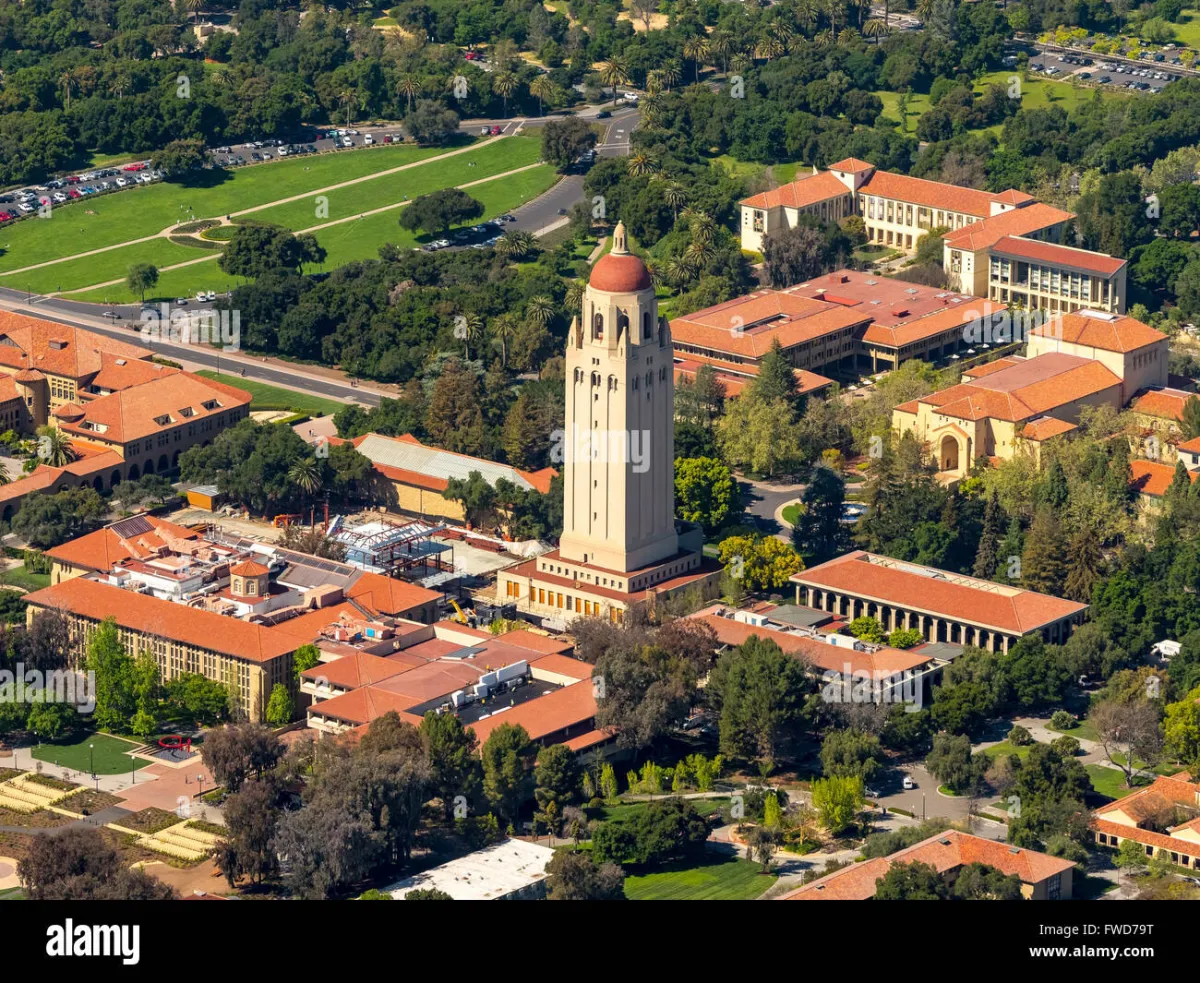 Photo: Palo Alto, via c8.alamy.com
And yet, for a brief, genuinely surreal window of time, that farmer held a legal claim that some very expensive attorneys believed could have forced the entire American tech industry to the negotiating table.
A Retired Man and His Hobby Patents
The farmer — we'll call him by his description rather than his name, since the settlement agreement that ended this saga was sealed under a nondisclosure arrangement that both parties have honored with remarkable discipline — retired from active wheat farming in the mid-1990s after selling most of his land holdings. He was in his late sixties, comfortable but not wealthy, and looking for something to occupy his mind.
He had always been a tinkerer. In his working years, he'd designed small mechanical improvements to irrigation systems, the kind of practical problem-solving that farming demands. In retirement, he turned that same tinkering instinct toward a new hobby: filing patents.
Not because he expected to profit from them. He was clear about that with anyone who asked. He found the process intellectually satisfying — the act of describing an idea precisely enough to meet the patent office's standards scratched the same itch that a well-designed irrigation valve had scratched thirty years earlier. Between 1995 and 2001, he filed more than a dozen patents on various concepts, most of them abstract enough to be essentially unfiled.
In 1997, he filed one for what he described as a system of "linked information nodes capable of bidirectional reference and dynamic content retrieval via a standardized query protocol."
He was describing, more or less, a system he'd sketched out for organizing his personal records — a kind of elaborate cross-referencing system for his farming documents and family history files. He had never used the internet. He was aware it existed in roughly the same way he was aware that particle accelerators existed: somewhere, people were doing something complicated with it.
The patent was approved in 1999. He filed it away and forgot about it.
Enter the Lawyer With Too Much Time and a PACER Subscription
Fast forward to 2007. A Silicon Valley patent attorney — the kind who makes a living hunting through USPTO records for overlooked intellectual property — was doing what patent attorneys do when they're between cases: reading old filings.
When he pulled up the Kansas farmer's 1997 patent and read the language carefully, he later told colleagues, he had to set his coffee down.
The description of "linked information nodes" and "standardized query protocol" mapped — imprecisely but legally plausibly — onto elements of the HTTP request-response cycle, the foundational communication method that allows web browsers to retrieve content from servers. It wasn't a perfect match. Patent law rarely requires perfection. It required enough overlap to make a federal judge squint, and this was, by the attorney's assessment, enough.
The attorney tracked down the farmer. The farmer, now in his mid-seventies, answered the phone on the third ring and was reportedly puzzled by the entire conversation. He confirmed he had filed the patent. He confirmed he had never commercialized it. He confirmed that he was not, in fact, aware of what HTTP stood for.
The Quiet Panic in Silicon Valley
What happened next is where the story gets genuinely difficult to document, because so much of it happened in conference rooms under attorney-client privilege. What is known — pieced together from court filings that were later partially unsealed, and from people who were adjacent to the negotiations — is that the attorney's assessment reached at least three major technology companies, and that internal legal teams at those companies did not immediately dismiss it.
The concern wasn't that the farmer would win a full patent infringement case. The concern was the discovery process that would accompany one — the depositions, the document production, the public exposure of how these companies' core infrastructure actually worked. In the post-dot-com era, with patent litigation already metastasizing across the tech sector, the calculus was ugly enough that settlement became attractive very quickly.
There were also secondary concerns about what a partial victory might look like. Even a settlement that acknowledged the patent's validity without admitting infringement could set a precedent that other patent holders might exploit.
Negotiations reportedly lasted about fourteen months. The farmer was represented, at no upfront cost to him, by the attorney who'd found the patent — working on contingency. At some point during the process, someone apparently explained to the farmer what the internet actually was. According to one secondhand account, his response was something along the lines of: "So it's like a very fast telephone book?"
What the Settlement Actually Means
The nondisclosure agreement was signed sometime in 2009. The terms have never been disclosed. The farmer returned to Kansas. The attorney, presumably, bought a nicer car.
What makes this story remarkable isn't the money — we don't know the number, and speculation would be irresponsible. What makes it remarkable is the structural absurdity at its core. The digital infrastructure that underpins billions of dollars in daily commerce, that connects hospitals and banks and governments and the device you're reading this on right now, was briefly entangled in a legal dispute with a man whose most sophisticated navigation technology was a spiral-bound atlas published in 2003.
The internet, for a moment, had a landlord. He grew wheat. He had no idea he owned the place.
The Lesson Nobody Learned
Patent attorneys will tell you this kind of thing isn't as rare as it sounds — that the USPTO has, over the decades, approved language vague enough to cast a very wide net, and that the gap between what an inventor intended and what a patent technically covers can be vast. The farmer's case is an extreme example, but it exists on a continuum.
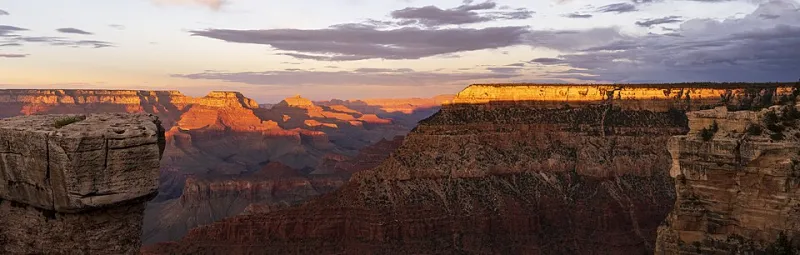
The farmer, by all accounts, used his settlement money to restore a vintage tractor and took a trip to see the Grand Canyon — navigating there, reportedly, by paper atlas.
 Photo: Grand Canyon, via www.jasonweissphotography.com
He got there just fine.