Eighty-Seven Years of the Wrong Skull: The Smithsonian's Most Embarrassing Secret
Eighty-Seven Years of the Wrong Skull: The Smithsonian's Most Embarrassing Secret
The Smithsonian Institution is, by almost any measure, the most authoritative museum complex in the United States. Nineteen museums. 146 million objects. The tagline is literally "the nation's attic." When the Smithsonian tells you something is real, authenticated, and historically significant, the expectation is that they've done the homework.
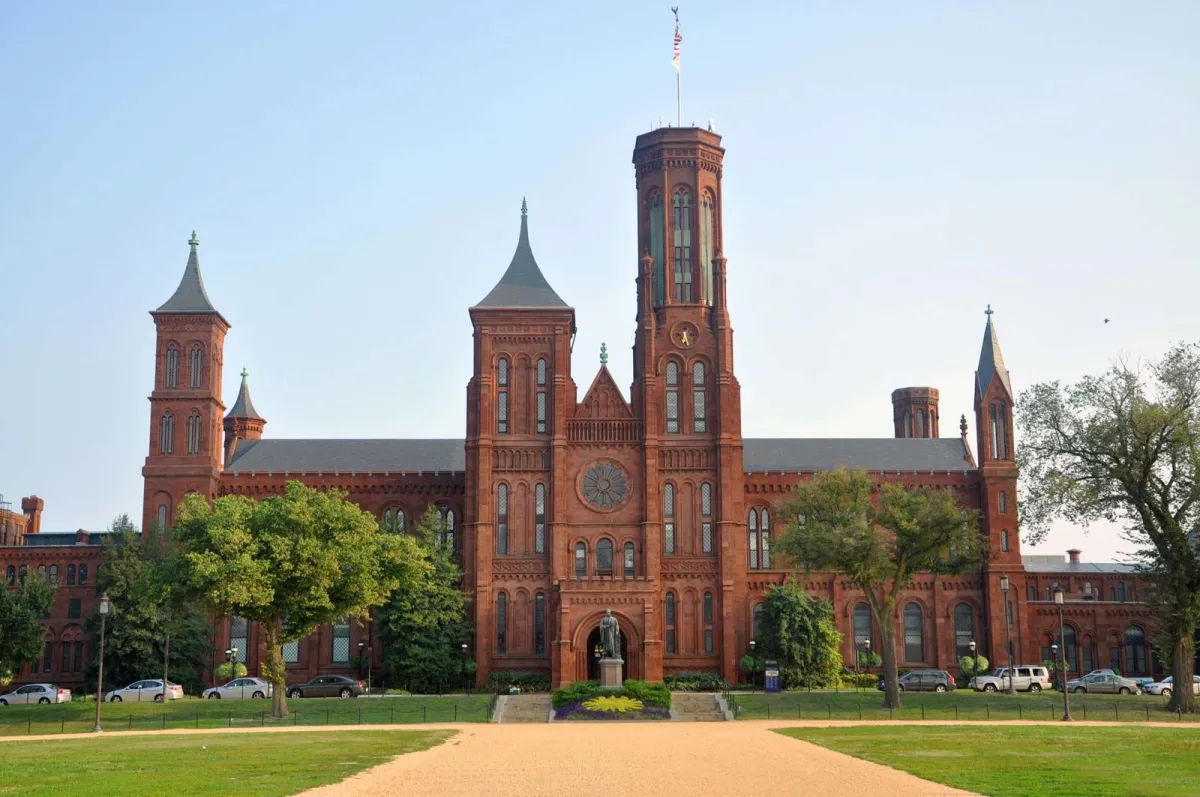 Photo: Smithsonian Institution, via cdn.britannica.com
Which makes it genuinely spectacular that for 87 years, one of their displays featured a skull that belonged to someone nobody has ever identified — presented with complete confidence as the remains of a known historical figure.
How You End Up Displaying the Wrong Head
To understand how this happened, you have to understand what American museums looked like in the late 19th century. The standards we now take for granted — chain of custody documentation, forensic verification, peer-reviewed authentication — simply did not exist in any formal sense. Institutions like the Smithsonian were, in their early decades, essentially operating on a combination of donor credibility, institutional reputation, and educated guesswork.
Human remains in particular moved through the 19th-century museum world with a casualness that is genuinely difficult to process from a modern perspective. Skulls and bones were collected, donated, purchased, and traded between institutions, private collectors, and academic departments with minimal documentation. Provenance was often established by a letter from a reputable person saying, essentially, "I believe this to be authentic." That was frequently enough.
In this environment, misidentification wasn't a scandal waiting to happen — it was practically built into the acquisition process. The surprising thing, in retrospect, isn't that it happened. It's that it took so long to catch.
The Display That Didn't Ask Questions
The specific skull in question arrived at the Smithsonian accompanied by documentation that linked it — through a chain of previous owners and institutional transfers — to a prominent figure in American history. The paperwork was plausible. The donors were credible by the standards of the time. The skull was placed on display, labeled with confidence, and visited by generations of Americans who had no reason to doubt what the placard said.
For 87 years, that display held. Curators came and went. The museum expanded dramatically. Research standards evolved. And still, the skull sat in its case, wearing its famous name like a borrowed coat.
The trouble was that nobody went back to look at the original acquisition records with fresh eyes until forensic anthropology had developed enough to actually test the claims being made. When researchers finally did — as part of a broader institutional review of human remains in the collection, driven partly by growing ethical concerns about how museums had historically acquired such materials — what they found was a problem.
When the Math Stopped Adding Up
Forensic review of skeletal remains can establish, with reasonable confidence, a range of biological characteristics: approximate age at death, biological sex, general geographic ancestry markers, evidence of specific injuries or diseases. It can't always identify who someone was, but it can often establish who they weren't.
In this case, the analysis was damaging. The skull's characteristics didn't align with what was historically documented about the person it was supposed to represent. The age markers were off. Other physical indicators didn't match the historical record. The bones, forensic reviewers concluded, belonged to someone else entirely — an unidentified individual whose actual identity and history may never be known.
The Smithsonian's internal response to this finding was, by all accounts, remarkably quiet. The display was updated. The incorrect identification was removed. A note acknowledging the uncertainty was added in language so measured and institutional that a casual visitor could easily have missed the magnitude of what was being admitted.
There was no press conference. No formal public apology. No exhibit explaining how the error occurred and what it meant for how the museum had operated for nearly a century. The correction happened, and then life at the Smithsonian went on.
What It Actually Means
The Smithsonian's misidentification story isn't unique — museums around the world have grappled with similar revelations as forensic science and provenance research have matured. What makes this particular case striking is the combination of duration, visibility, and the institution involved.
This wasn't a minor regional museum with limited resources. This was the flagship of American cultural preservation, visited by millions of people, trusted implicitly by the public and by policymakers. For 87 years, that trust was extended to a display that was simply wrong — and the wrongness wasn't caught not because the evidence was cleverly concealed, but because nobody thought to look.
It also raises an uncomfortable question about what else might be sitting quietly in museum collections around the country, correctly labeled by the standards of 1890 and incorrectly labeled by the standards of today. The Smithsonian holds 146 million objects. Forensic review of human remains has accelerated in recent decades, driven partly by the Native American Graves Protection and Repatriation Act of 1990, which required institutions to identify and potentially return Indigenous remains. That process has produced corrections and revelations at museums across the country — some public, some handled with the same quiet institutional understatement the Smithsonian brought to this case.
 Photo: Native American Graves Protection and Repatriation Act, via 0701.static.prezi.com
The Stranger in the Display Case
Somewhere in all of this is the person whose skull actually sat in that Smithsonian display for 87 years. An unknown individual — their life, death, and identity completely unrecorded — spent nearly a century being presented to American schoolchildren and tourists as someone else. Their actual name, if it was ever known, is gone. Their story is gone.
The famous name on the placard got a correction. The real occupant of the display case got nothing — not even the dignity of being known.
If that doesn't strike you as at least a little unhinged, read it again.