He Rang Up a Fugitive's Beef Jerky and Went Home Without a Clue
There is a certain kind of story that law enforcement loves to tell at retirement dinners. The one where years of exhausting investigative work, mountains of paperwork, and millions in federal resources finally converge into a dramatic takedown. This is not that story.
This is the story of a Tuesday afternoon in rural Ohio, a rack of gas station snacks, and a transaction so mundane that the man running the register forgot about it before the customer's truck had even left the parking lot.
The Most Forgettable Sale in American Criminal History
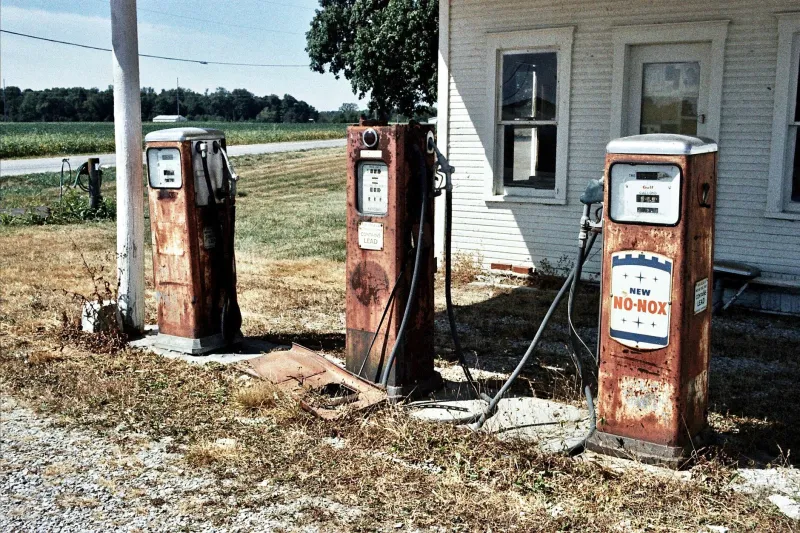
The Marathon gas station outside of Caldwell, Ohio — a town of fewer than 1,700 people in Noble County — is not the kind of place where history tends to happen. It sells fuel, lottery tickets, fountain drinks, and the rotating cast of shrink-wrapped snacks that define American road travel. On the afternoon in question, a clerk working a mid-week shift processed dozens of transactions. Cash for a fill-up. A pack of cigarettes. A fountain soda. And then, a bag of beef jerky and a bottle of water, paid for in cash by a quiet man in a baseball cap who made no eye contact and said nothing beyond a polite thanks.
The clerk — then in his mid-twenties, working the register to supplement income from a part-time construction job — would later tell investigators he remembered almost nothing about the man. Medium height, older, unremarkable. The kind of person you forget while they're still standing in front of you.
The fugitive walked out, climbed into a pickup, and drove away.
And that should have been the end of it.
A Wanted Poster, a Customer, and a Very Long Shot
What changed everything had nothing to do with the clerk at all.
A customer who came in shortly after — a retired schoolteacher who stopped at that particular Marathon regularly on her way back from visiting family in Woodsfield — noticed something. Pinned to the small bulletin board near the door, the way small-town businesses still do, was a printed FBI wanted notice. It had been there for months, maybe longer. Most people walked past it without a glance.
She didn't.
The face on that poster looked, she thought, an awful lot like the man she'd just watched pull out of the parking lot. Older than the photo, sure. Heavier. But something about the jaw, the way he held his shoulders — it nagged at her. She mentioned it to the clerk, who shrugged. She went home and mentioned it to her husband, who told her she was probably imagining things. She called the FBI tip line anyway.
The call was logged, flagged, and — critically — taken seriously by an agent who had been working the case for eleven years and had learned to treat even the long shots with respect.
Two Decades of Hiding, Undone by a Snack Run
The fugitive in question had been on the run since the mid-1990s, wanted on federal charges that included fraud, conspiracy, and a handful of related financial crimes that had cost investors and institutions millions of dollars. He had done what many long-term fugitives do: adopted a quiet life, stayed off the grid, used cash, avoided digital footprints, and moved periodically to stay ahead of any pattern recognition. He was not violent. He was not flashy. He was, by every account, extraordinarily good at being invisible.
For nearly two decades, he was.
Investigators cross-referencing the tip with surveillance footage from the gas station's exterior camera — low resolution, grainy in the way that rural security cameras tend to be — managed to capture a partial plate number from the pickup. That partial, run through Ohio DMV records and cross-referenced with surrounding counties, narrowed the field. Three days after the schoolteacher's phone call, federal agents located the man at a rented farmhouse roughly forty miles from the Marathon station.
He was taken into custody without incident. He did not run. He did not resist. By most accounts, he seemed almost relieved.
The Clerk Found Out From the News
Here is perhaps the most quietly absurd part of the whole thing: the clerk learned he had served a federal fugitive the same way most of Noble County did — from a local news segment that aired a week after the arrest.
He recognized the name from the broadcast, connected it to the FBI poster he walked past every day without reading, and spent the next several minutes trying to remember anything useful about the transaction. He could not. The beef jerky. The water. The baseball cap. That was the sum total of what he had.
He was never called to testify. His name appeared in no official record of the case. The arrest was attributed, correctly, to the tip provided by the retired schoolteacher — who, for her part, was modest about the whole thing and declined most interview requests.
What the Story Actually Tells Us
Law enforcement officials who later discussed the case publicly noted something worth sitting with: the fugitive had been living within a few hours of that gas station for nearly three years. He had likely passed through that county dozens of times. He had probably been seen by hundreds of people who simply did not look closely enough, or look at the right moment, or look at a bulletin board.
The retired schoolteacher looked.
Decades of federal investigation, surveillance operations, and tip-line management ultimately came down to one person who happened to glance at a piece of paper tacked to a corkboard in a gas station in eastern Ohio — and then actually did something about what she saw.
The clerk still works in the area. He has told the story at enough cookouts by now that he's gotten pretty good at the punchline: he served a man with a multi-million-dollar federal case attached to his name, charged him $4.79, and told him to have a good one.
The fugitive probably did, for about three more days.