Congress Spent $30,000 Importing Camels to Texas and Then Just… Left Them There
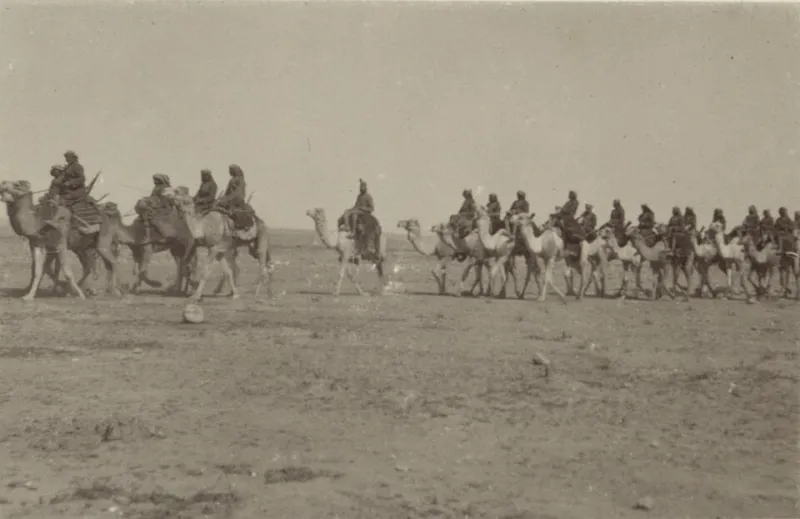
Photo: American Colony Photo Department, Public domain, via Wikimedia Commons
At some point in American history, a federal official looked at the vast, sun-baked expanse of the Southwest desert and thought: you know what this place needs? Camels. Not metaphorically. Actual, literal, hump-bearing camels imported from the Middle East at taxpayer expense.
And here's the thing — it wasn't a joke. It wasn't a stunt. It was a fully funded, congressionally approved, militarily serious program. And it worked, right up until the moment the government decided it didn't want to deal with the camels anymore and just kind of let them loose in Texas.
Welcome to the United States Camel Corps. One of the most genuinely unhinged experiments in American military history, and proof that the federal government has always had a complicated relationship with follow-through.
The Idea That Actually Made Sense (For About Five Minutes)
Credit where it's due: the original logic was not crazy. In the early 1850s, the U.S. Army was struggling with a real logistical problem. The Southwest — newly acquired from Mexico after the Mexican-American War — was vast, arid, and brutally hard on horses and mules. Supply lines were a nightmare. Soldiers were dying not from combat but from the sheer difficulty of moving men and equipment across hundreds of miles of desert terrain.
Secretly of War Jefferson Davis — yes, that Jefferson Davis, before his career took a dramatically different turn — was among the most enthusiastic supporters of an unusual solution. Camels, he argued, were literally built for this environment. They could carry heavy loads, travel enormous distances without water, and navigate terrain that destroyed conventional pack animals. The Middle East had been using them for exactly this purpose for thousands of years. Why was the U.S. Army still struggling with mules?
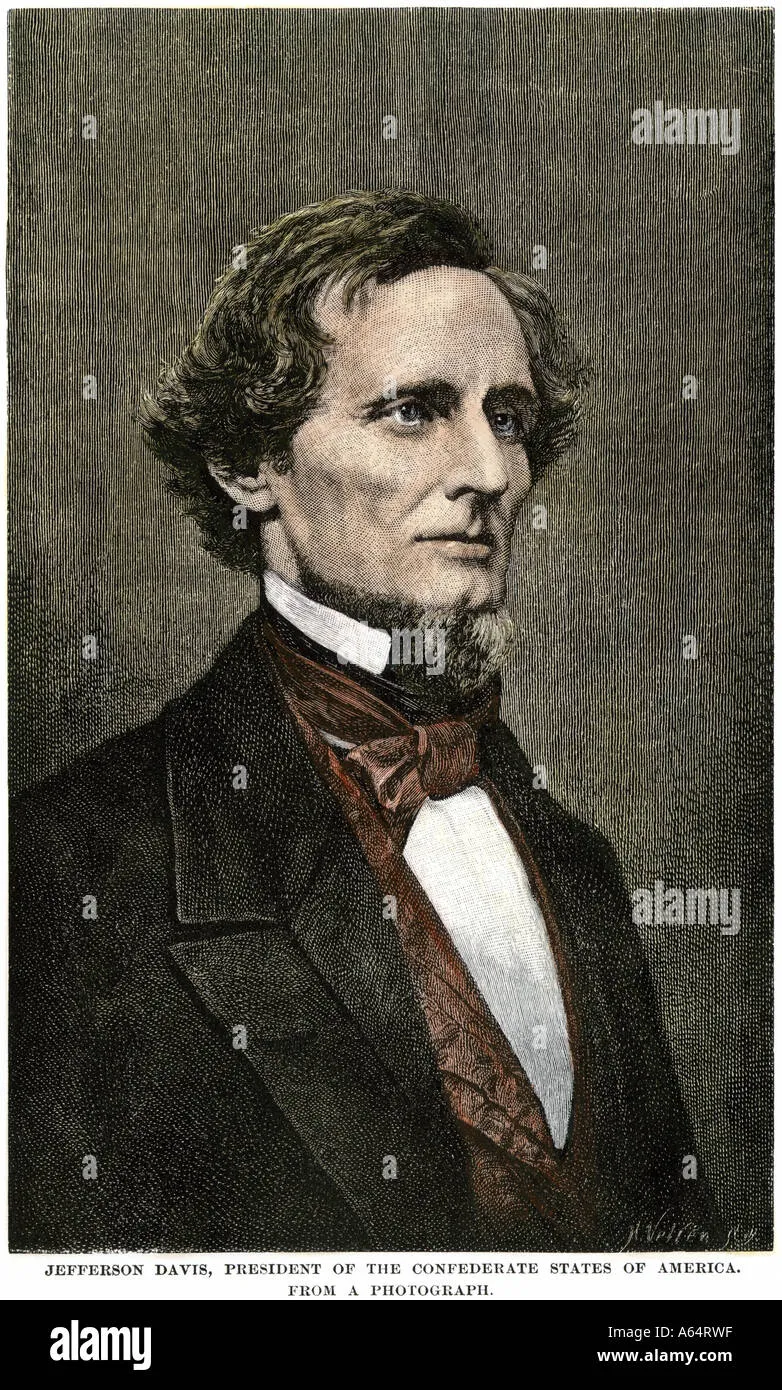 Photo: Jefferson Davis, via c8.alamy.com
Congress, in a moment of genuine open-mindedness that history rarely gives it credit for, agreed. In 1855, lawmakers approved $30,000 — roughly $1 million in today's money — to import camels for military use. The following year, the USS Supply sailed to Egypt and Turkey and came back with 33 camels. A second shipment brought the total to 75.
The Part Where It Actually Worked
Here's what the standard telling of this story tends to skip: the camels were great at their jobs.
Army reports from the late 1850s consistently praised the animals' performance. They outpaced mules on desert terrain, carried heavier loads, and required dramatically less water. During a 1857 survey expedition from Texas to California, the camel contingent performed so well that the expedition's leader, Lieutenant Edward Fitzgerald Beale, became one of the program's most vocal champions. He called them indispensable. He lobbied hard for expanding the program.
The camels were also, by most accounts, deeply weird to be around. Soldiers complained that the animals smelled terrible, made unsettling noises, and had a habit of terrifying horses and mules into stampedes just by being nearby. One camel reportedly developed a personal vendetta against a specific sergeant and pursued it with impressive consistency. But in terms of raw logistical performance, the experiment was working.
Enter the Civil War, Stage Left
And then everything fell apart — not because of the camels, but because of history.
When the Civil War erupted in 1861, the U.S. Army had considerably larger problems than camel logistics. The experimental program was effectively abandoned overnight. The camels at Camp Verde in Texas fell under Confederate control when Texas seceded. Some were sold. Some were used briefly by Confederate forces. Some were auctioned off to circuses and private buyers.
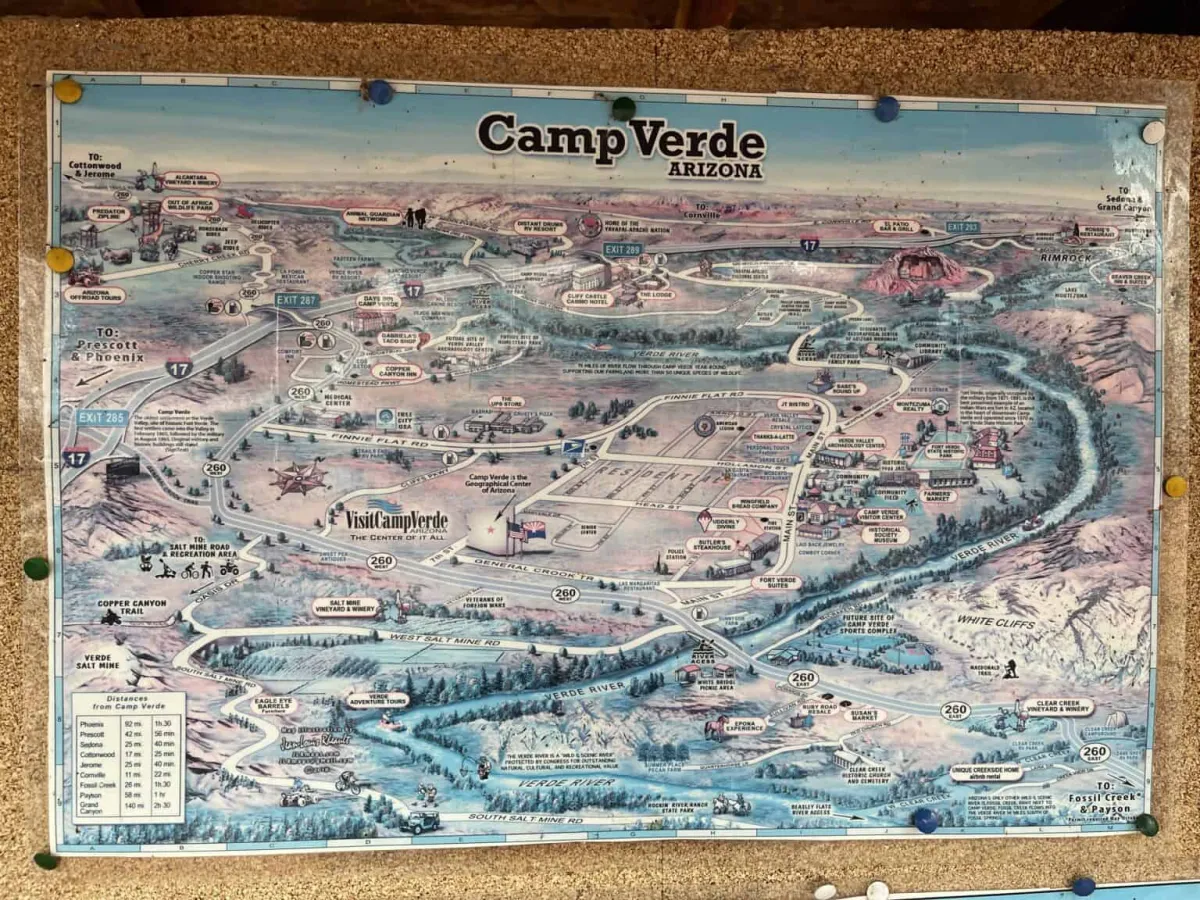 Photo: Camp Verde, via theplaceswherewego.com
But a significant number of them — accounts vary, but somewhere between 25 and 40 animals — were simply released. Into the desert. Because apparently that seemed like a reasonable solution at the time.
The Army did not issue a formal policy on what to do with the camels it was abandoning. It did not arrange for their care or rehoming in any organized way. It just... stopped thinking about them. Which is a level of institutional detachment that feels both historically distant and somehow deeply familiar.
The Feral Camel Era of American History
What followed is one of the more surreal chapters in the story of the American frontier.
For decades after the Civil War, credible reports of wild camels in the American Southwest trickled into newspapers, military dispatches, and local government records. Arizona. Texas. New Mexico. The sightings were frequent enough, and came from reliable enough sources — soldiers, surveyors, ranchers who had no particular reason to invent large ungulates — that they couldn't be dismissed as folklore.
The most famous of the feral camels was reportedly a reddish animal that became known as the Red Ghost of Arizona. First reported in 1883, the creature was blamed for trampling a woman to death at a settler encampment along the Salt River. Over the following decade, it was spotted across a wide swath of the territory, always described as enormous, always moving alone, and — in the detail that turned this into genuine legend — apparently carrying a desiccated human corpse strapped to its back. The corpse was eventually identified as likely belonging to a prospector who had tied himself to the animal, presumably during some ill-fated desert crossing, and hadn't survived the experience.
The Red Ghost was finally shot and killed by a rancher in 1893. It was, unmistakably, a camel.
The last credible wild camel sighting in the American Southwest dates to around 1941, when a prospector in Arizona reported an encounter with a large, single-humped animal that didn't match any known local wildlife. By that point, the U.S. Camel Corps had been officially defunct for eighty years.
What the Camels Left Behind
The U.S. Camel Corps never received a formal conclusion. There was no debrief, no lessons-learned document, no congressional hearing on what had gone right or wrong. The program simply dissolved, along with the war that interrupted it, and the animals that had made it work wandered off into the desert to become ghost stories.
Which is a genuinely strange ending for a program that, by the evidence available, was actually succeeding. The camels weren't the problem. The camels were doing their jobs. The humans were the ones who couldn't figure out what to do next.
Somewhere out in the Arizona desert, that feels like a metaphor. Or possibly just a camel.