He Walked Out of a Maximum Security Prison Inside a Cardboard Box — and the Guards Helped Load Him Into the Truck
There's a version of this story that sounds like a bad joke. A man walks into prison, builds a box, and mails himself out. The punchline, in this case, is that it actually worked — for a while — and the people responsible for stopping exactly this kind of thing were the ones who made it possible.
The year was 1988. The place was the Coffield Unit, a sprawling maximum-security facility in Tennessee Colony, Texas, roughly 100 miles southeast of Dallas. It housed some of the state's most dangerous inmates, and it operated on the kind of rigid, institutional logic that makes large systems feel impenetrable right up until the moment they aren't.
The Setup Nobody Took Seriously
William Neal Moore had been incarcerated for armed robbery. He was not, by any documented account, a criminal mastermind. What he was, apparently, was patient and observant — two qualities that tend to go a long way in environments where the daily routine almost never changes.
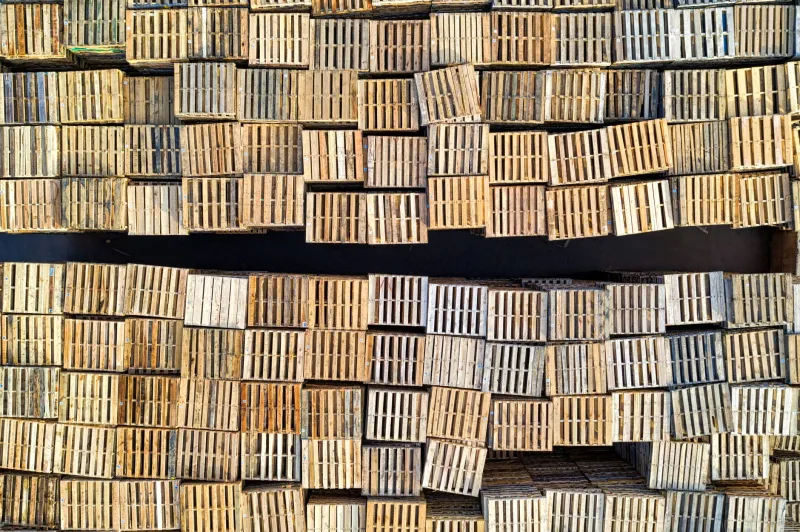
Moore had been assigned to the prison's furniture factory, a common work assignment at Coffield. Inmates built wooden crates and furniture components that were regularly loaded onto delivery trucks and shipped off the premises. The operation ran on a schedule. The trucks came. The crates went out. Nobody opened every crate before it left the loading dock because, historically, nobody had ever needed to.
Moore spent weeks watching the operation. He noted which crates were inspected and which ones weren't. He noted the timing of the truck arrivals. He noted, crucially, that once a crate was loaded and tagged, it moved through the system with a kind of bureaucratic momentum that made questioning it feel like someone else's job.
The Mechanics of the Impossible
The crate Moore built was roughly the size of a large steamer trunk — big enough to fold a human body into, uncomfortable enough that most people wouldn't voluntarily stay in one for more than thirty seconds. Moore drilled small air holes along the sides. He stocked it with water and a small amount of food. He arranged for two fellow inmates to nail the lid shut after he climbed inside.
This is the part that tends to make people pause: he needed help. Which means at least two other people knew what he was doing and chose not to report it. Prison solidarity is a documented phenomenon, but it still represents a remarkable act of collective silence.
On the morning of the escape, Moore climbed in. The lid went on. The crate was tagged, stacked with others, and loaded onto the delivery truck by guards who had no particular reason to think anything unusual was happening. The truck drove off the property.
Once outside the perimeter and parked at a warehouse loading dock, Moore broke out of the crate from the inside, walked away, and disappeared into East Texas.
Three Days of Institutional Confusion
When Moore was discovered missing at count, the initial assumption was that something had gone wrong with the paperwork. This is not a cynical observation — it reflects how escapes are typically discovered. The first response is almost always administrative. Someone checks the records. Someone checks again. Someone starts making phone calls.
The warden's early theory, according to accounts from the period, was that an employee had to be involved. The idea that a man had simply built a box and ridden out on a truck felt too absurd to treat as the most likely explanation. Investigators spent considerable energy looking for an inside accomplice who, it eventually became clear, didn't exist — at least not among the staff.
Moore was recaptured three days later, not far from the prison, after a tip from a local resident. He had made it roughly 30 miles.
Why It Worked As Long As It Did
The escape exposed something uncomfortable about how large institutions handle routine operations. The furniture factory ran efficiently because everyone trusted the system. The crates went out because the crates always went out. No individual guard was negligent in any obvious way — each person in the chain was doing their job as it had always been defined.
Moore's escape worked, briefly, because he found the gap between what the rules said and what people actually checked. The rules almost certainly required inspection of outgoing shipments. The practice, accumulated over years of uneventful truck departures, had drifted away from that requirement.
After the escape, the Texas Department of Corrections overhauled its inspection procedures for the Coffield factory and several similar operations across the state. Crates got opened. Schedules got randomized. The specific vulnerability Moore had identified was closed.
The Part That Sticks
Moore served out the remainder of his sentence and was eventually released. He has given occasional interviews over the years, and his account of the escape is remarkably matter-of-fact — the tone of a man describing a plumbing repair rather than one of the stranger prison escapes in Texas history.
What makes the story genuinely unhinged isn't the audacity of the plan. It's how ordinary all the moving parts were. A factory. A crate. A truck. A schedule. None of those things were unusual. The only unusual element was a man who looked at all of them together and thought: that's a door.
The warden, for what it's worth, reportedly never fully got over the embarrassment of the thing. Not the escape itself — escapes happen. The part that bothered him was that his own staff had loaded the man onto the truck.
They'd done it cheerfully, too. Just doing their jobs.