The Fire Nobody Remembers: How America's Deadliest Wildfire Got Buried Under Someone Else's Headline
The Fire Nobody Remembers: How America's Deadliest Wildfire Got Buried Under Someone Else's Headline
Imagine the deadliest wildfire in American history. Thousands dead. Entire towns reduced to ash. A disaster so catastrophic that survivors reportedly described the air itself catching fire. Now imagine that almost no one in the country learns about it — not because the press missed it, but because something slightly less terrible happened on the exact same night in a more famous city.
That is not a hypothetical. That is October 8, 1871.
Two Fires, One Night, One Winner
Everybody knows the story of the Great Chicago Fire. Mrs. O'Leary's cow. The lantern. The inferno that swallowed a city. It killed roughly 300 people, left 100,000 homeless, and became one of the most retold disasters in American history. There are museums about it. School curricula. A hockey team named after it.
On that same night — same date, same hours, same October wind system pushing dry air across the upper Midwest — a fire ignited near Peshtigo, Wisconsin that makes Chicago look like a backyard barbecue gone slightly sideways.
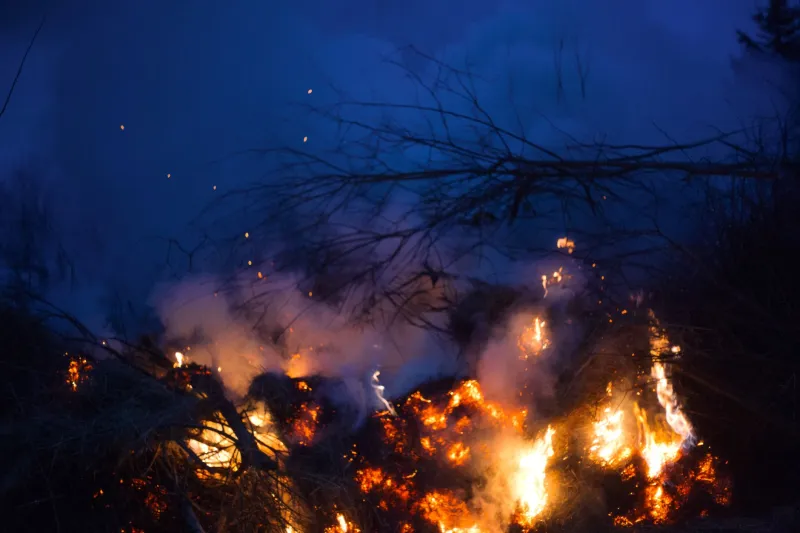
The Peshtigo Fire killed somewhere between 1,500 and 2,500 people. Historians still argue about the exact number because so many entire families were wiped out that there was no one left to report them missing. The town of Peshtigo itself was gone in about an hour. Survivors described a firestorm so intense it created its own weather — tornado-like columns of flame that lifted people off the ground. The Peshtigo River, where hundreds of residents fled for safety, ran so hot that some people boiled alive while standing in the water.
And yet, when the newspapers came out the next morning, the front pages belonged to Chicago.
Why Chicago Won the News Cycle
This is where the story gets genuinely strange. The Peshtigo disaster wasn't hidden. Reporters knew about it. The scale of the casualties was at least partially understood within days. But Chicago had something Peshtigo didn't: a telegraph office that survived the fire.
Peshtigo's communication infrastructure was ash. Reporters couldn't get quotes, couldn't get numbers, couldn't get the kind of vivid eyewitness detail that sells papers. Chicago, meanwhile, had journalists on the ground filing dramatic dispatches almost immediately. The story was simply easier to tell — and in 1871, easier to tell meant it got told.
There's also the uncomfortable truth that Chicago was a major American city, an economic hub, a place editors and readers in New York and Boston actually cared about. Peshtigo was a lumber town most Americans couldn't have found on a map. The calculus of national attention was brutal and it hasn't changed much since.
Governor Lucius Fairchild of Wisconsin, who rushed to the disaster zone personally, was reportedly furious at the lack of national response. His wife organized one of the first major civilian relief efforts in American history almost entirely on her own initiative, because federal attention was almost entirely directed at Chicago.
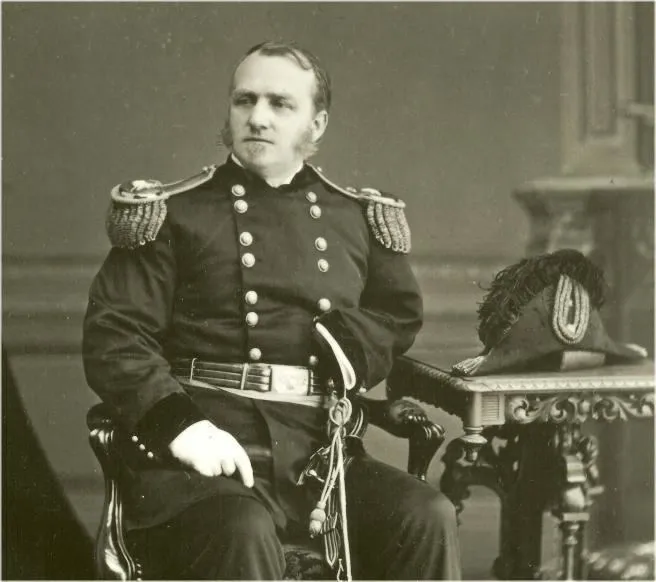 Photo: Lucius Fairchild, via alchetron.com
The Man with the Campfire
So who started it? This is where the story gets murkier and, honestly, more interesting.
The Peshtigo Fire almost certainly didn't have a single origin point. The entire region had been baking under drought conditions for months. Logging operations had left enormous piles of dry debris across the forest floor. Small fires had been burning for weeks across northern Wisconsin and Michigan — settlers routinely used fire to clear land, and in the fall of 1871, those fires had gotten badly out of hand across hundreds of miles.
But local accounts, and some subsequent historical investigations, point to a traveler — accounts vary on whether he was a hunter, a surveyor, or simply a man passing through — who made camp near the town's outskirts in the days before the main fire and left a campfire improperly extinguished. Whether that specific fire was the trigger or simply one of dozens of contributing sparks remains genuinely uncertain. What is certain is that the conditions were so extreme that almost any ignition source would have produced catastrophic results. The forest was essentially a loaded gun. Somebody pulled the trigger, and history never bothered to fully identify them.
The Laws That Came From the Ashes
Here's the part that actually matters beyond the grim arithmetic of casualties: the Peshtigo Fire, despite being forgotten by popular history, quietly transformed American fire safety policy in ways that are still visible today.
In the years following 1871, Wisconsin and neighboring states began enacting the first serious regulations around controlled burns on private land. The disaster also accelerated federal interest in what would eventually become the U.S. Forest Service, established in 1905. The argument that unmanaged logging debris created catastrophic fire risk — an argument made directly and repeatedly in the aftermath of Peshtigo — became foundational to American forestry management philosophy.
The irony is sharp: a fire that almost nobody remembers produced safety frameworks that have almost certainly prevented fires that everyone would have heard about.
Today, Peshtigo has a small museum dedicated to the fire. There's a mass grave where victims are buried. The marker is modest. Visitors are few.
Why This Should Bother You
The Peshtigo Fire is a genuinely unsettling story not because of the death toll — though that alone is staggering — but because of what it reveals about how history gets written. Two disasters happened simultaneously. One was in a famous city with working communications and economic importance. One was in a timber town with neither. The famous city got the coverage, the memorials, the cultural legacy, and a hockey team. The timber town got a footnote.
Nearly 2,000 people died in a fire so intense it may have created its own tornadoes, on the same night as an event every American schoolchild learns about — and the odds are good you're reading about Peshtigo for the first time right now.
That's not just strange. That's truly unhinged.