He Died on Page One and Lived Like a Legend: The False Obituary That Built America's Most Famous War Reporter

He Died on Page One and Lived Like a Legend: The False Obituary That Built America's Most Famous War Reporter
There's an old joke about wanting to read your own obituary. Most people mean it as a lighthearted fantasy — a chance to see what people really thought of you. For one American journalist in the summer of 1898, it wasn't a joke. It was a career strategy. An accidental one, sure. But a strategy nonetheless.
His name doesn't appear in most textbooks anymore, which is part of what makes this story so strange. At one point, he was arguably the most-read war correspondent in the country. And it all started because somebody else's body got tagged with his name in the chaos of the Spanish-American War.
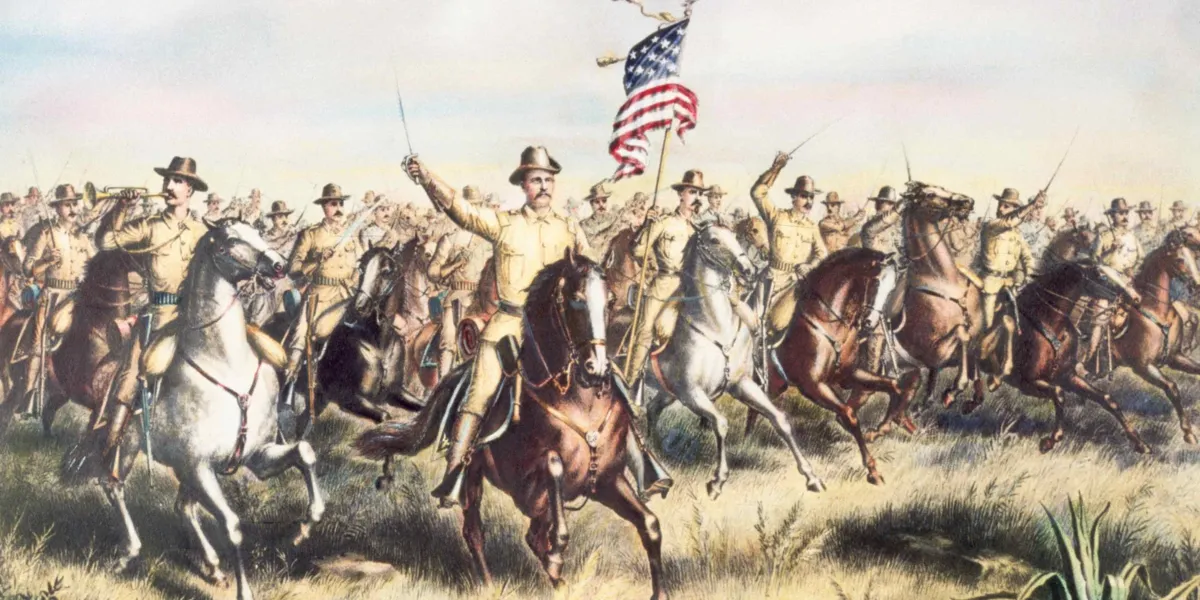 Photo: Spanish-American War, via res.cloudinary.com
A War, a Body, and a Terrible Clerical Error
The summer of 1898 was a fever dream for American journalism. The Spanish-American War had turned Cuba into a press circus, with reporters from every major East Coast paper scrambling over each other for front-page material. Casualties were common, communication was chaotic, and the logistics of confirming who was alive and who wasn't were, to put it charitably, a disaster.
Somewhere in the fog of that confusion, a field dispatch arrived at a New York editorial desk reporting the death of a young correspondent. The name attached to the report matched — close enough, anyway — the byline of a reporter who had been filing dispatches from the front. His editors, working on deadline and trusting the wire, made the call. They ran the obituary.
 Photo: New York, via theplanetd.com
It was a masterpiece of the form. Whoever wrote it clearly liked the man. They painted him as fearless, principled, poetic in his observations — a journalist who had gone to Cuba not for glory but because he genuinely believed the story mattered. The piece ran across multiple columns. Other papers, not wanting to be scooped on sentiment, picked it up and added their own flourishes. Within 48 hours, this young reporter had been eulogized from Boston to Chicago as one of the finest minds American journalism had ever produced.
The only problem: he was alive. Sunburned, mildly dysentery-ridden, and completely unaware that he was famous.
The Bidding War for a Dead Man's Byline
By the time the correction could theoretically have been issued, something extraordinary had already happened. Two of the largest newspaper publishers in the country — operating in that gilded era of competitive press empires — had gotten into a bidding war over the rights to publish this man's future work. Not because they'd read his actual dispatches, which were competent but unremarkable. Because they'd read his obituary.
The mythology had already calcified. He was, according to the American reading public, a giant. A martyr who had somehow survived martyrdom. When he walked back into a New York newsroom very much alive, the reaction wasn't relief so much as it was opportunity. His editor allegedly looked at him, looked at the stack of telegrams from competing publishers, and said something to the effect of: "Don't correct anything yet."
The formal correction, when it came, was buried. A small item, a few lines, easy to miss. The obituary, meanwhile, had been reprinted, clipped, and tucked into scrapbooks across the country. For most readers, the story of his death — and miraculous survival — simply became part of his legend.
The Burden of Being Your Own Ghost
Here's where the story tips from funny into genuinely strange. For the rest of his career, this correspondent operated under the shadow of a version of himself that had never actually existed. The obituary had described a man of extraordinary courage and moral clarity. Every assignment he took, every dispatch he filed, was now measured against that invented standard.
By most accounts, he felt it acutely. Colleagues who knew him in later years described a man who took reckless risks in the field that his contemporaries found baffling — not out of genuine fearlessness, but out of a compulsive need to justify the legend the obituary had created. He covered conflicts he had no business covering. He filed from positions that got other journalists killed. He wrote with an intensity that sometimes crossed the line from vivid into overwrought, as though he was always trying to match the prose of his own eulogy.
He never did officially correct the record. There are letters suggesting he tried, at least once, to set the story straight — only to be quietly discouraged by editors who understood that the myth was worth more than the correction.
The Pulitzer Footnote Nobody Talks About
In the early 1900s, as American journalism was formalizing its standards and its prizes, this correspondent's body of work was cited multiple times in discussions about what distinguished great war reporting from mere eyewitness accounts. The obituary itself — that original, fabricated monument to a man who wasn't dead — was referenced in at least one editorial as evidence of the power of the form.
The irony is almost too neat to be real: an invented document about a living man became a benchmark for journalistic excellence.
The mix-up was never officially corrected in the historical record. The original erroneous dispatch has never been fully traced to its source. And the correspondent himself died — for real, this time, in the early 1920s — having lived out a career built almost entirely on the reputation that a stranger's misidentified body had accidentally gifted him.
Why This Story Still Matters
There's a version of this tale that's just a funny historical footnote — a bureaucratic blunder in a chaotic war that happened to benefit one lucky journalist. But the deeper cut is more uncomfortable. It's a story about how reputation works, how mythology outruns reality, and how once a narrative about a person gets printed and distributed, it becomes almost impossible to un-print.
In 1898, that process took two days and a wire dispatch.
These days, of course, it takes considerably less time. The mechanism is different. The dynamic is identical.
Somewhere out there, the ghost of a false obituary is still doing the work its subject never quite managed to do himself. Which is, depending on your perspective, either the most American story imaginable — or the most unhinged.