A Dead Woman's Diary Looked Like Gibberish — Until a Retired Court Reporter Decided It Wasn't
The Safe-Deposit Box That Opened a Can of Worms
Probate attorneys deal in paperwork. Wills, deeds, trust documents, account statements — the administrative machinery of a person's life, sorted and catalogued after they're gone. Most of it is tedious. Some of it is contentious. Occasionally, something comes out of a safe-deposit box that makes an experienced estate lawyer put down their coffee and stare.
This was one of those times.
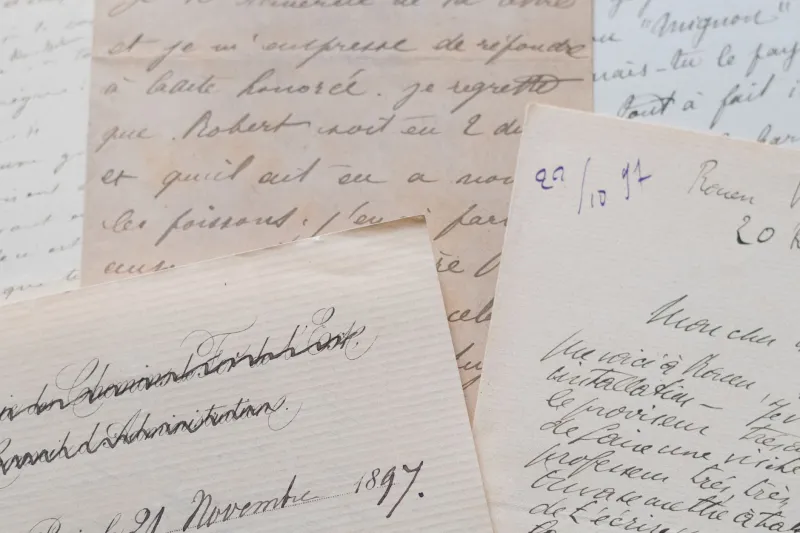
The document was forty-three pages long. It was dated, signed, witnessed, and notarized — all the formal requirements of a valid last will and testament, checked off in proper order. The notary's seal was genuine. The witnesses were traceable. The signature matched.
The contents, however, were written entirely in Gregg shorthand.
Not partially. Not with a few abbreviated notes in the margins. Every substantive instruction, every bequest, every condition attached to the estate — written in a system of loops, curves, and dashes that had been the dominant form of professional stenography in the United States for most of the twentieth century and had since become, for practical purposes, a dead language.
The great-grandmother who had written it had been a professional secretary for decades. To her, Gregg shorthand wasn't a code. It was simply how she wrote quickly and comfortably. She had apparently composed her will the same way she had composed correspondence for fifty years: efficiently, in the system she knew best.
The problem was that almost nobody else knew it anymore.
What Gregg Shorthand Actually Is
Gregg shorthand was invented in the late nineteenth century by John Robert Gregg, an Irish-born stenographer who wanted a faster, more intuitive writing system than the angular methods then in common use. His system used flowing, cursive-style strokes to represent phonetic sounds rather than individual letters, allowing a skilled practitioner to write at speeds approaching two hundred words per minute.
For most of the twentieth century, it was essentially the standard. Court reporters used it. Executive secretaries used it. Journalists used it. It was taught in high schools and business colleges across the country as a practical professional skill.
Then came word processors. Then digital recording. Then voice-to-text software. The profession of stenographer didn't disappear — court reporters still exist, still trained in machine shorthand systems — but Gregg specifically faded with extraordinary speed. By the early 2000s, it was rarely taught. By the 2010s, finding someone who could read it fluently was roughly as likely as finding someone who could read a telegram in Morse code.
The will had been written sometime in the 1930s. The woman who wrote it had died in her nineties, having apparently never mentioned to anyone that her estate documents were in a format that would require a specialist to interpret.
The Legal Problem Was Genuinely Unprecedented
The heir — a granddaughter who stood to inherit what attorneys estimated was a substantial eight-figure estate — was in an uncomfortable position. The will was valid. Nobody disputed that. But a will that cannot be read cannot be executed, and a court is not going to distribute an estate based on a document whose contents are unknown.
The alternative, if the will couldn't be decoded, was intestate succession — the legal process by which an estate is divided according to state law rather than the deceased's wishes. Depending on the family structure, that could mean the inheritance being split among multiple heirs, some of whom had contested the granddaughter's relationship with the deceased.
Attorneys attempted to locate professional translators. The Library of Congress had archival Gregg materials. A few universities with stenography programs had faculty who knew the system academically. But reading a forty-three-page legal document written in an individual's personal shorthand — which inevitably incorporates idiosyncratic abbreviations and style choices — was a different challenge than recognizing the system in the abstract.
Three specialists attempted the translation. All three returned partial results with significant gaps and disclaimers about confidence levels. A legal document with significant gaps is not a legal document you can take to probate court.
The case had been running for two years when a retired court reporter in her mid-seventies read about it in a regional newspaper and called the attorney's office.
The Woman Who Could Actually Read It
She had learned Gregg shorthand in 1968 at a business college in the Midwest. She had spent thirty years as a court reporter, eventually transitioning to the machine-based stenography systems that became standard in courtrooms, but she had never entirely stopped using the Gregg system in her personal notes. It was, she later told a reporter, simply how she thought on paper.
She was not charging a fee. She had seen the news story, recognized the system being described, and felt — in her words — that it would be a shame to let a woman's last wishes go unread because nobody had bothered to keep the knowledge alive.
It took her eleven weeks. The deceased's personal shorthand had quirks — abbreviations that weren't standard, a few symbols that appeared to be entirely invented — but the retired court reporter worked through them methodically, cross-referencing against the context of surrounding passages, flagging uncertainties, and producing a fully annotated translation with explanatory notes for each non-standard element.
The will, it turned out, was detailed, specific, and clear. The granddaughter was the primary beneficiary. The conditions attached to the inheritance were unusual but legally coherent. There were specific bequests to charitable organizations, instructions about personal property, and a handwritten note in the final pages — also in shorthand — that appeared to be a personal message to the family rather than a legal instruction.
The probate court accepted the translation. The estate was distributed according to the great-grandmother's wishes.
What a Ninety-Year-Old Document Actually Proved
The case ended up cited in legal discussions about document accessibility and the long-term risks of using specialized notation systems in formal legal instruments. It raised questions that estate attorneys are apparently still debating: at what point does an unusual but technically valid document become functionally unenforceable?
The retired court reporter attended the probate hearing as a witness. She was asked to demonstrate her fluency in the system by reading a passage aloud from the original document. She did so without pausing.
Aftward, she reportedly told the granddaughter that the personal note in the final pages was lovely, and that she hoped it had been worth the wait.
The granddaughter said it was.