He Drilled for Water, Struck Oil, and Ended Up in Handcuffs
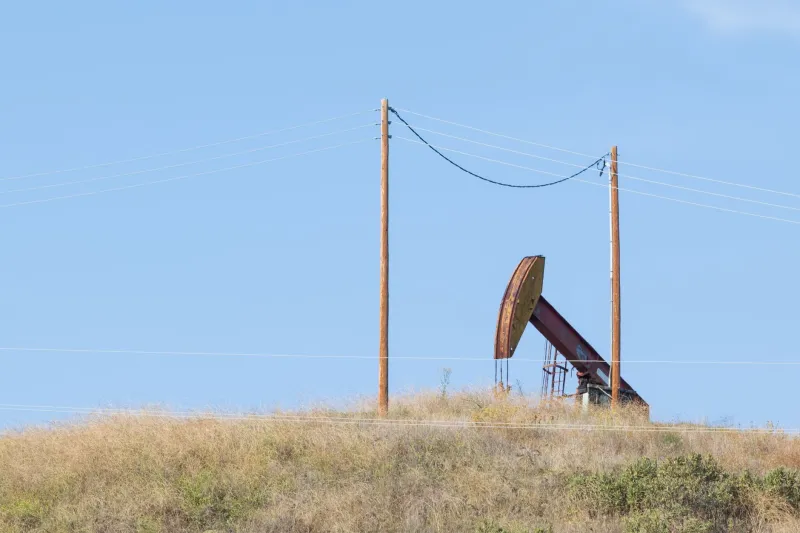
Every Texan schoolkid grows up hearing the mythology: man drills a hole, black gold comes up, man becomes a millionaire. It is practically a state creation story. The reality, as one retired geology professor discovered in the early 2000s, is considerably less cinematic. In fact, it ends with a court summons, an EPA notice of violation, and a check written to the federal government for a resource the man had tried very hard to give back.
This is the story of what happens when you find oil on your own land and the law decides that is your problem.
The Man Who Should Have Known Better
Robert Mace — a retired professor of geological sciences who had spent thirty years studying subsurface formations — purchased a forty-acre parcel of land in Polk County, Texas in 1999. He intended to build a small retirement home, maintain a modest cattle operation, and spend his remaining years doing exactly what he wanted. He was not looking for oil. He was, initially, looking for water.
The property had no municipal water connection. Mace, applying a lifetime of professional knowledge, conducted an informal survey of his land before drilling a well. He noticed some surface indicators — specific soil discoloration, a faint petroleum odor near a low-lying area, slight iridescence on standing water after rain — that he recognized immediately. He had seen these signs hundreds of times in his career. They suggested a shallow hydrocarbon deposit beneath the surface.
Most people in that situation would have called an oil company and started negotiating. Mace, who describes himself as "not particularly interested in becoming a petroleum businessman," instead called the Texas Railroad Commission — the agency that regulates oil and gas in Texas — to report what he suspected and ask how to proceed.
This was, in retrospect, the moment everything went sideways.
The Regulatory Labyrinth
The Texas Railroad Commission directed him to file an exploratory permit before doing anything further. He filed. During the permitting process, he disclosed the surface indicators he had observed. This disclosure triggered a review by the Texas Commission on Environmental Quality, which flagged the site for preliminary environmental assessment because of the potential for surface contamination from a shallow deposit.
While that assessment was pending, Mace — believing he was still within his rights as a property owner — conducted a shallow test bore on his own land using equipment he owned. He struck oil at approximately sixty feet. It was a small deposit by commercial standards, but unmistakably there.
The bore was not permitted. He had filed for an exploratory permit, but it had not yet been approved. Under Texas law, drilling without a valid permit — even on your own property, even for the purpose of investigation — constitutes an unauthorized discharge risk and is a violation of the Texas Water Code and several provisions of the Texas Natural Resources Code.
The Railroad Commission issued a notice of violation. The TCEQ opened a separate enforcement action. And because the test bore had been drilled close enough to a seasonal drainage channel that technically qualified as a water of the United States under the Clean Water Act, the EPA was notified.
Three agencies. One unpermitted hole. Sixty feet of depth.
The Arrest That Made the News
The arrest itself was almost accidental. During the TCEQ inspection of his property, Mace — frustrated by what he described as "being treated like a criminal for reporting something" — refused to allow inspectors access to the eastern portion of his land without a warrant, citing Fourth Amendment protections. This was his legal right. The inspectors left.
Two days later, they returned with a warrant and a Polk County sheriff's deputy. When the deputy arrived, there was a miscommunication about the scope of the warrant — Mace believed it covered the bore site only; the inspectors believed it covered the full property. Mace physically blocked access to an outbuilding he felt was outside the warrant's scope. The deputy, erring on the side of compliance with the inspectors, arrested him for obstruction.
The obstruction charge was dropped within a week. But the image of a sixty-three-year-old retired geology professor being walked off his own property in handcuffs, having done nothing more than find oil and argue about a warrant, was not the kind of thing that disappeared quietly.
The Mineral Rights Question
Here is the part that surprises most people: in Texas — unlike most of the world, where subsurface resources belong to the state — landowners can hold mineral rights to what lies beneath their property. Mace did hold those rights. They were in his deed.
But holding mineral rights and being legally permitted to extract resources are two entirely different things. Extraction requires permits. Permits require environmental review. Environmental review, when it involves a potential contamination risk, can take years. And while all of that is happening, the resource just sits there, technically yours, completely inaccessible.
Mace eventually resolved his enforcement violations through a consent agreement that required him to properly cap the test bore — at his expense — and pay a civil penalty of approximately $11,000. He never extracted a drop of oil commercially. The deposit remains beneath his property to this day, permitted, assessed, and untouched.
What One Hole in the Ground Taught a Geologist
Mace, in a 2007 interview with a Texas energy trade publication, reflected on the experience with what sounds like hard-won equanimity. "I spent thirty years teaching students how the earth works," he said. "It took about four years to learn how the law works. They're both complicated. The earth, at least, follows consistent rules."
His case became a minor landmark in Texas property law discussions — not because it changed anything, but because it illustrated with unusual clarity how the gap between ownership and access can swallow a person whole.
You can own the land. You can own what's under it. You can follow every rule you know about, report everything you're supposed to report, and still end up in handcuffs on your own front lawn because the rules you didn't know about got there first.
The oil is still down there. Sixty feet. Just sitting.