The Crooked Letter That Hanged a Man: How a Busted Typewriter Key Cracked a Case Before Science Had a Name for It
Picture a detective in 1907, sitting under a gas lamp, squinting at a ransom note. No DNA. No fingerprints on file. No crime lab within a hundred miles. Just paper, ink, and one very observant set of eyes noticing something that almost nobody else would have caught: the letter e was crooked.
Not dramatically crooked. Not obviously crooked. Just slightly — maybe a hair's width — tilted to the left, every single time it appeared on the page. And that tiny mechanical imperfection was about to become the most damning piece of evidence in an American courtroom.
A Machine With a Tell
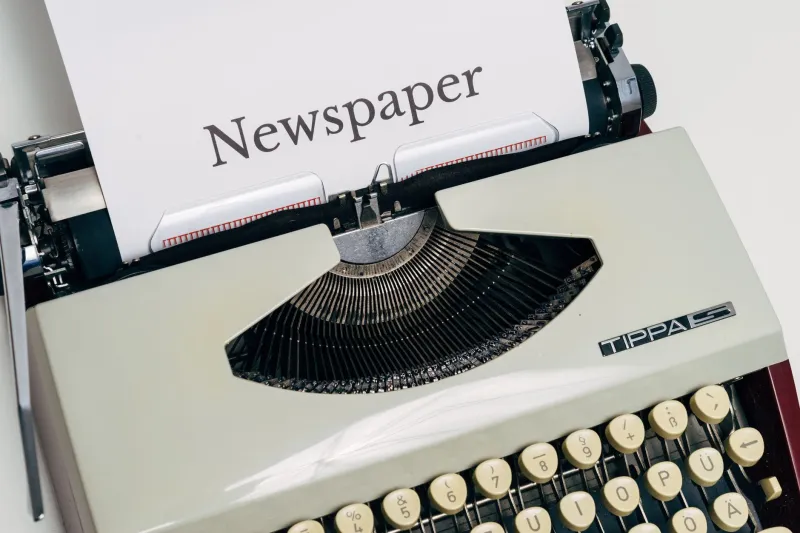
By the early twentieth century, typewriters had become standard equipment in offices, law firms, and wealthy households across the United States. The Remington, the Underwood, the Oliver — these machines were everywhere. And because they were everywhere, investigators initially assumed they were interchangeable. If a document was typed, tracing it back to a specific machine seemed about as possible as identifying which printing press produced a particular newspaper.
That assumption turned out to be completely wrong.
Typewriters, it turns out, age badly and individually. Keys wear down at different rates depending on how hard a typist strikes them. Platens shift. Alignment screws loosen. A machine used daily for two or three years develops its own fingerprint — a constellation of tiny mechanical quirks that no other typewriter on earth shares in quite the same combination.
The detective who first understood this — and more importantly, who figured out how to prove it in court — wasn't a scientist. He was a former newspaper editor turned private investigator named Albert Osborn, and in the years following his early casework, he would essentially invent the field of questioned document examination almost entirely by accident.
The Note That Gave Itself Away
The specifics of the case that launched typewriter forensics into the public consciousness involved a fraudulent business letter designed to extort money from a wealthy Chicago-area merchant. The letter had been typed, which the sender clearly believed made it untraceable. Handwriting analysis, after all, was what detectives looked for. A typewriter was anonymous machinery.
Except that this particular typewriter had a problem with its e key. The small hammer that struck the ribbon sat just slightly off-center, producing a character that consistently printed a fraction lower on the left side than the right. To a casual reader, the letters looked normal. Under magnification, every single e on the page leaned like a drunk at last call.
When investigators searched the suspect's office and found his typewriter, Osborn did something no one had formally done before: he typed the same words from the letter on the suspect's machine and laid the two documents side by side under a magnifying glass. The crooked e matched. Not approximately — exactly, down to the same fractional misalignment, the same ink distribution pattern, the same gap between the bottom of the character and the baseline.
The suspect insisted the letter hadn't come from his machine. Osborn brought both documents into court, had them projected onto a large screen, and walked the jury through the comparison point by point. The jury took less than two hours to convict.
Accidentally Inventing a Science
What makes this story genuinely unhinged is that Osborn didn't set out to create a new forensic discipline. He was trying to solve one case. But the courtroom success of his typewriter comparison method spread quickly through legal and investigative circles, and within a decade, questioned document examination — including typewriter analysis — had become a recognized specialty.
Osborn eventually published Questioned Documents in 1910, a textbook that became the foundational reference for the field and remained in use for decades. He went on to testify in some of the most high-profile cases of the early twentieth century, including the Lindbergh kidnapping trial in 1935, where ransom note analysis played a central role in the conviction of Bruno Hauptmann.
All of it traces back, more or less, to one slightly misaligned key on one typewriter that a tired fraudster forgot to check.
The Legacy of the Crooked E
Typewriter forensics remained a serious investigative tool well into the 1980s, used in everything from fraud cases to Cold War espionage. The FBI maintained a reference library of typewriter typefaces and defect patterns. Soviet-era intelligence agencies were famously meticulous about controlling which typewriters their operatives used, specifically because Western investigators had become so good at tracing documents back to specific machines.
When the word processor arrived and typewriters faded from everyday use, the discipline evolved rather than disappeared — document examiners today apply the same logic to printer toner patterns, paper fiber analysis, and digital metadata.
But it all started with a letter that leaned just a little too far to the left, and one detective stubborn enough to care about the difference.
The typewriter didn't mean to confess. It just couldn't help itself.