The Man Who Bought His Childhood Home Twice Without Realizing It
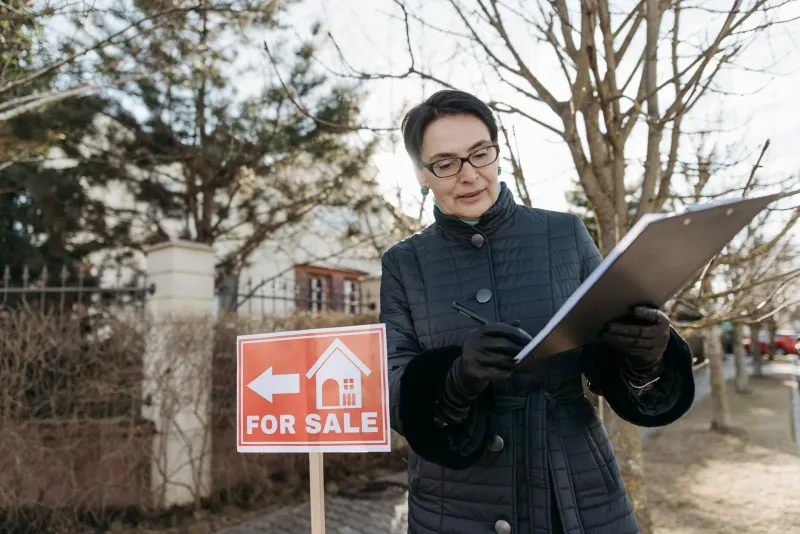
Real estate transactions are supposed to be straightforward. You buy a house, you own it. You sell a house, someone else owns it. But in Stark County, Ohio, the universe decided to play the longest practical joke in property law history, leaving one man as the unwitting owner of the same house twice.
The Setup: A Normal Sale Gone Wrong
In 1987, Robert Chen inherited his childhood home in Canton, Ohio, after his grandmother passed away. The modest two-story house on Maple Street held decades of memories, but Chen had already established his life in Columbus. After six months of deliberation, he sold the property to a young couple for $42,000 and moved on with his life.
What Chen didn't know was that his real estate attorney had made a critical error. While the sale went through and the buyers moved in, the deed transfer was never properly filed with the county recorder's office. Instead, it sat in a stack of paperwork that somehow migrated between three different filing cabinets over the next two decades.
The Plot Thickens: A Foreclosure Mystery
Fast-forward to 2010. The housing crisis had hit Ohio hard, and foreclosure auctions were happening weekly in Stark County. Chen, now a successful small business owner, decided to diversify his investments by purchasing distressed properties. He'd been flipping houses for three years and had developed a keen eye for undervalued properties.
At a county auction in March 2010, Chen spotted what looked like a steal: a two-story house on Maple Street with good bones, listed at a starting bid of $18,000. The property had been foreclosed on after the owners defaulted on their mortgage. Chen barely glanced at the address—he was focused on the photos and the potential profit margin.
He won the auction with a bid of $23,500.
The Discovery: When Nostalgia Meets Bureaucracy
Chen's first hint that something was amiss came when he drove to the property to assess renovation needs. As he pulled into the driveway, a wave of childhood memories hit him. The oak tree he'd climbed as a kid. The distinctive brick pattern on the front steps. The way the afternoon light hit the kitchen window.
"I sat in my car for twenty minutes just staring at the house," Chen later told the Canton Repository. "I kept thinking, 'This looks exactly like Grandma's house.' But that was impossible—I sold that house in the '80s."
Chen walked through the property in a daze, recognizing details that no amount of coincidence could explain. The built-in bookshelf his grandfather had installed in the living room. The slightly crooked bathroom door that had never hung quite right. Even the basement still had the workbench where he'd learned to use tools.
The Investigation: Unraveling Two Decades of Confusion
Convinced he was losing his mind, Chen drove straight to the Stark County Recorder's Office with both sets of property documents—the 1987 sale papers and his fresh 2010 auction receipt. What the clerks discovered defied belief.
According to county records, Chen had never actually sold the house in 1987. The deed was still in his name. Meanwhile, the couple who had purchased the property and lived there for over a decade had somehow obtained a mortgage and insurance on a house they didn't legally own.
"It was like a real estate Twilight Zone episode," said county recorder Jim Walsh. "We had one man who owned a house twice, a family who had lived somewhere they didn't own for twenty years, and a bank that had foreclosed on a property they'd never had legal claim to."
The investigation revealed a cascade of errors that would make Kafka proud. The original deed transfer had been misfiled in 1987, leading to a chain reaction of bureaucratic confusion. When the buyers applied for their mortgage, the title company had somehow missed the filing error. When they defaulted in 2009, the bank foreclosed based on incomplete records.
The Resolution: Legal Limbo Gets Sorted
Sorting out the mess took eight months and involved lawyers from three different firms. The county ultimately ruled that Chen's 1987 sale was valid despite the filing error, meaning his 2010 purchase was technically buying back his own property from himself.
The foreclosing bank had to refund Chen's auction payment, the original buyers were granted retroactive ownership for their years of residence, and the county implemented new filing procedures to prevent similar incidents.
Chen kept the house.
The Aftermath: When Bureaucracy Becomes Comedy
"People ask me if I'm angry about the whole thing," Chen reflected. "But honestly, how can you be mad about accidentally buying your childhood home back for half price? If that's not the universe telling you something, I don't know what is."
Chen renovated the property and now rents it to college students, keeping the built-in bookshelf and the crooked bathroom door exactly as they were. He's framed both sets of property documents in the kitchen—a reminder that sometimes the most unbelievable coincidences are just bureaucracy wearing a disguise.
The story serves as a bizarre testament to how fragile our property records really are, and how a single misfiled document can create a real estate riddle that takes decades to solve. In a world where we track everything digitally, it's oddly comforting to know that somewhere in Ohio, old-fashioned paperwork confusion can still create the kind of coincidence that sounds too strange to be true.
But it is true. Chen has the deeds to prove it—both of them.