The Night Chicago Burned (And Everyone Pointed Fingers at a Cow)
On October 8, 1871, flames tore through Chicago like a hungry beast, consuming everything in their path. By the time the smoke cleared three days later, 300 people were dead, 100,000 were homeless, and a third of the city lay in ashes. The disaster was so catastrophic that people needed someone to blame — and they found the perfect scapegoat in the most unlikely suspect: a cow.
According to the story that spread like wildfire (pun intended), Mrs. Catherine O'Leary was milking her cow in the barn behind her cottage on DeKoven Street when the animal kicked over a lantern, igniting the hay and starting the inferno that would reshape American history. It was the perfect narrative: simple, visual, and satisfyingly ridiculous.
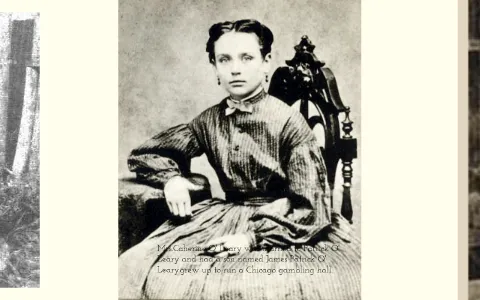 Photo: Mrs. Catherine O'Leary, via 0901.static.prezi.com
There was just one problem. It never happened.
The Reporter Who Invented History's Most Famous Cow
The cow story was pure fiction, cooked up by Chicago Republican reporter Michael Ahern to make his fire coverage more colorful. Ahern later admitted he'd completely fabricated the tale, but by then it was too late. The image of Mrs. O'Leary's clumsy cow had burned itself into American folklore more permanently than the fire had burned Chicago.
The real Mrs. O'Leary became a reluctant celebrity, hounded by reporters and gawkers who wanted to see the woman whose cow had "destroyed" Chicago. She spent the rest of her life insisting the story was false, but nobody wanted to listen. Truth, it turns out, is far less entertaining than a good cow joke.
What actually started the fire? Nobody knows for sure. The official investigation concluded it began somewhere near the O'Leary property, but the exact cause remains one of history's great mysteries. Theories range from spontaneous combustion to a meteor shower, but none involve livestock and dairy equipment.
When City Hall Finally Said Sorry to a Cow
For 126 years, Chicago let the cow take the blame. Then, in 1997, something extraordinary happened: the Chicago City Council formally exonerated Mrs. O'Leary and her cow in an official resolution.
Councilman Ed Burke introduced the measure, stating that the O'Leary family had "suffered unjustly" from the fabricated story. The resolution declared that "the cow and Mrs. O'Leary have been unfairly criticized" and that the city was "setting the record straight."
Think about that for a moment. A major American city spent over a century blaming an animal for a disaster, then held an official government meeting to apologize to said animal. If that's not the most Chicago thing ever, nothing is.
The Mythology That Wouldn't Die
Even after the official exoneration, the cow story persists. It's taught in schools, referenced in movies, and immortalized in countless retellings. The myth has become more powerful than the truth, which says something profound about how we process historical trauma.
The O'Leary cottage was destroyed in the fire, but the city eventually built a fire academy on the site. There's a certain poetic justice in training firefighters where the most famous fire in American history allegedly began — even if that beginning was complete nonsense.
Mrs. O'Leary died in 1895, still protesting her innocence. Her cow, whose name was never recorded (because apparently nobody thought to interview the primary suspect), presumably lived out its days blissfully unaware of its place in American infamy.
The Real Legacy of America's Most Famous Fire
The Great Chicago Fire wasn't just about destruction — it was about rebirth. The city that rose from the ashes became a marvel of modern architecture and urban planning. The fire cleared the way for innovations like steel-frame construction and comprehensive fire codes that influenced cities worldwide.
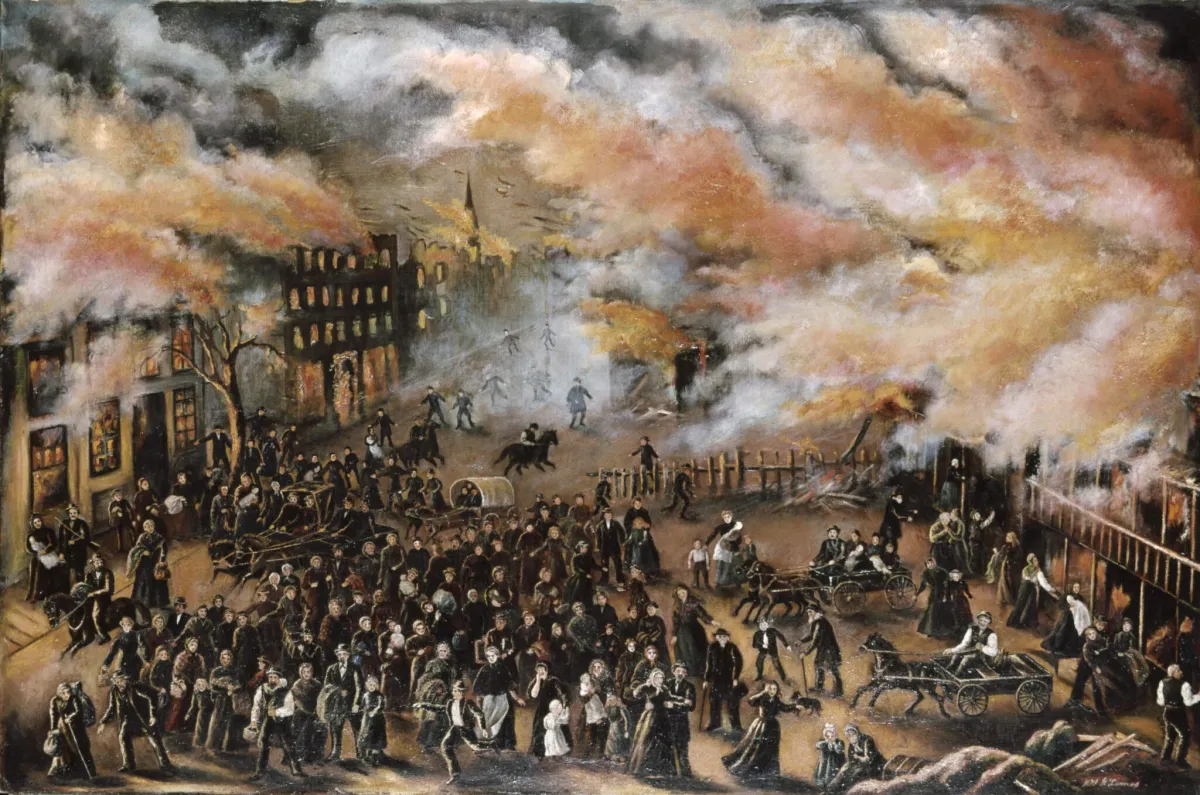 Photo: Great Chicago Fire, via www.chicagohistory.org
But perhaps the most remarkable thing about the Great Chicago Fire is how a completely fabricated story about a cow became more famous than any of the real heroes, villains, or victims of the actual disaster. It's a perfect example of how mythology can overpower history, especially when the mythology involves farm animals and property damage.
So the next time you hear about Mrs. O'Leary's cow, remember: you're not hearing history. You're hearing the greatest fake news story of the 19th century — one so good that it took a city government 126 years to officially admit they'd been punking themselves the entire time.
And somewhere in the great barnyard in the sky, one very patient cow is probably still waiting for that apology to actually mean something.