The Candy Bar That Changed Kitchen History: How a Melted Snack Launched the Microwave Revolution
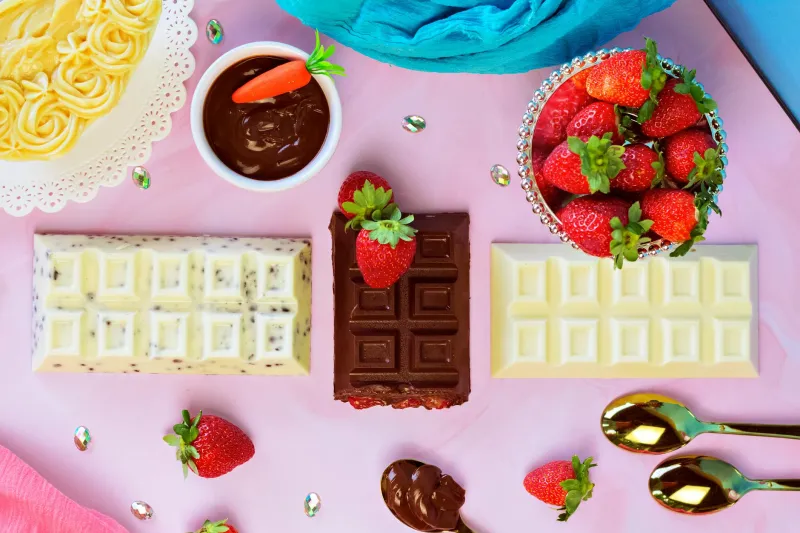
The Sweet Accident That Started Everything
Picture this: You're a brilliant engineer working on cutting-edge military radar technology in 1945, and you reach into your pocket for a quick snack only to find a gooey mess where your chocolate bar used to be. Most people would curse their luck and toss the melted candy. Percy Spencer decided to change the world instead.
Spencer was testing a military-grade magnetron—a device that generates the microwaves used in radar systems—when he noticed something peculiar. The Mr. Goodbar in his pocket had turned into chocolate soup, even though he hadn't been anywhere near a heat source. While his colleagues might have chalked it up to body heat or a warm day, Spencer's engineering mind immediately started asking dangerous questions: What if this wasn't an accident?
When Curiosity Meets Popcorn
The next day, Spencer returned to his lab with a bag of popcorn kernels. He positioned them near the magnetron, switched on the machine, and watched in amazement as the kernels began popping furiously. This wasn't just scientific curiosity anymore—this was the moment kitchen history pivoted on a handful of corn.
But Spencer wasn't done. The following morning, he brought an egg to work. He cut a hole in a kettle, placed the egg inside, and aimed the magnetron's microwaves directly at it. Within seconds, the egg exploded, covering a skeptical colleague's face with hot yolk. That messy moment proved Spencer's theory: microwaves could cook food from the inside out, heating the water molecules within ingredients rather than applying external heat.
From Military Secret to Kitchen Revolution
What happened next sounds like the plot of a corporate thriller. Spencer's employer, Raytheon, immediately recognized the commercial potential of cooking with radar waves. The company filed for a patent in 1945, and by 1947, they had built the first commercial microwave oven.
There was just one tiny problem: the "Radarange" stood six feet tall, weighed 750 pounds, and cost $52,000 in today's money. It was less "convenient kitchen appliance" and more "industrial cooking monument." Early models required water cooling systems and were primarily sold to restaurants and airlines—places where speed mattered more than counter space.
The Long Road to Your Kitchen Counter
For the next two decades, microwave ovens remained expensive curiosities. The technology gradually improved, but it wasn't until 1967 that Amana (a Raytheon subsidiary) introduced the first countertop model. Even then, the "Amana Radarange" cost about $3,200 in today's dollars and came with a 25-page instruction manual that read like a physics textbook.
American consumers were skeptical, and rightfully so. Early marketing campaigns had to convince people that microwave cooking was safe, effective, and wouldn't turn their food radioactive. The Federal Communications Commission had to approve each model, and many early adopters worried about radiation leakage—concerns that weren't entirely unfounded given the technology's military origins.
The Popcorn Revolution
The real breakthrough came in the 1970s when food companies began developing microwave-specific products. Suddenly, you could make popcorn in three minutes without oil, heat, or cleanup. TV dinners evolved from aluminum trays that took 45 minutes in a conventional oven to plastic containers ready in five minutes. The microwave didn't just change how Americans cooked—it fundamentally altered what they considered "cooking" in the first place.
By 1986, microwave ovens outsold gas ranges for the first time. Today, they're found in over 90% of American households, making them more common than dishwashers. The device born from a melted candy bar had become as essential as the refrigerator.
The Butterfly Effect of Chocolate
Here's the truly mind-bending part: Spencer's discovery was completely accidental. He was working on improving radar technology for military applications, not revolutionizing food preparation. If he had been wearing different clothes that day, if he had skipped his afternoon snack, if he had simply thrown away the melted chocolate without thinking twice, the microwave oven might never have existed.
Consider the ripple effects: Without microwaves, there would be no microwave popcorn industry (worth $1.2 billion annually), no Hot Pockets empire, and no 3 AM college dorm room ramen culture. The entire landscape of convenience food would look completely different. Busy families might still be tied to stovetops and ovens for every meal, and the phrase "nuke it" would only apply to actual nuclear weapons.
The Engineer Who Changed Everything
Percy Spencer eventually earned 120 patents during his career at Raytheon, but none would prove as transformative as the accidental discovery that started with a melted Mr. Goodbar. He died in 1970, just as microwave ovens were beginning their march toward kitchen ubiquity.
The next time you're heating up leftover pizza or making microwave popcorn at 2 AM, remember: You're participating in a culinary revolution that began because one curious engineer refused to ignore a melted candy bar. Sometimes the most world-changing discoveries happen when we pay attention to the accidents everyone else would dismiss.
In a universe of infinite possibilities, it's beautifully absurd that the machine that would define modern convenience cooking was born from nothing more than chocolate, curiosity, and one engineer's refusal to accept coincidence as coincidence.